
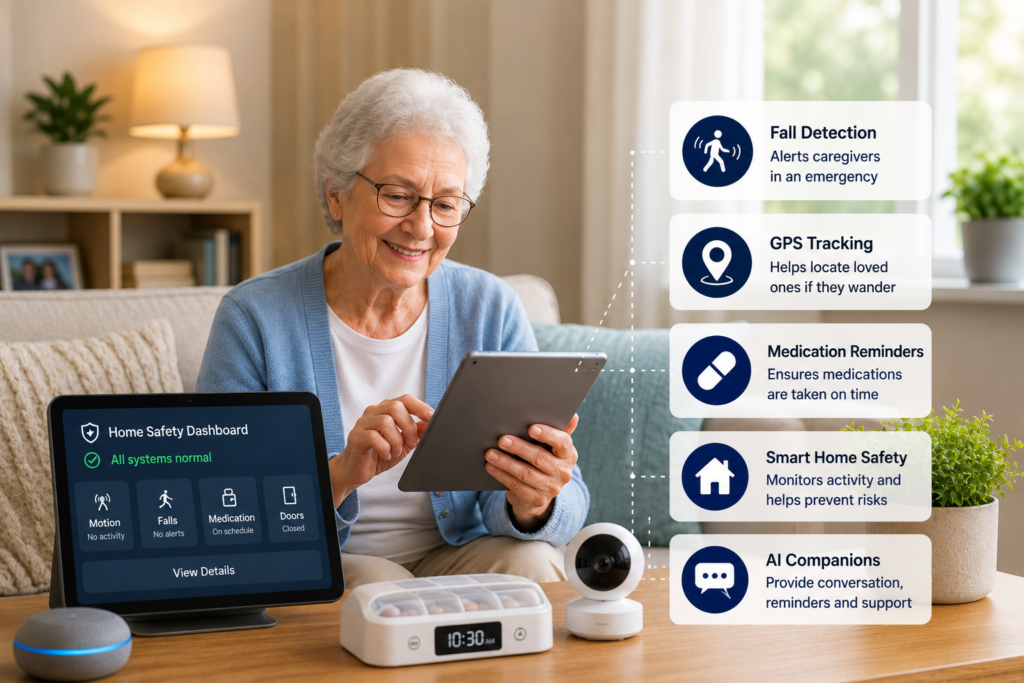
Caring for someone living with dementia often means balancing safety, independence, and peace of mind. As more families explore smart technology for dementia, many are asking whether AI-powered tools can help loved ones stay safer at home while maintaining independence.
As technology evolves, more families are asking an important question:
Can AI and smart technology actually help people with dementia stay safer at home?
The short answer is yes – in some situations, technology can provide valuable reassurance, reduce risks, and support independence.
But it’s equally important to understand where technology helps, where human care remains essential, and what families should consider before introducing monitoring or AI-powered tools into someone’s daily life.
If you’ve been following our Dementia Awareness Series, you may also find these guides helpful:
- Falls prevention & dementia: 7 home safety risks families often miss
- What Happens After a Hospital Visit for Someone With Dementia?
- 5 things to do before an ambulance arrives for someone with dementia
In this guide
- How technology can support dementia safety at home
- Best smart devices for dementia patients at home
- AI tools for wandering prevention and fall detection
- Medication reminder technology
- Can AI companionship replace human care?
- Privacy concerns families should understand
- When specialist support is still essential
Why families are choosing smart technology for dementia care
Smart technology for dementia is becoming increasingly popular among families looking for practical ways to improve home safety.
For many households, the biggest concerns include:
- Wandering or getting lost
- Falls at home
- Missed medications
- Sudden changes in routine or behaviour
- Difficulty monitoring someone remotely
- Safety overnight
According to the Alzheimer’s Society guidance on technology and dementia care, assistive technology can help support independence and reduce some day to day risks when used appropriately.
However, technology works best as part of a broader care plan, not as a standalone solution.
- Fall detection sensors and movement alerts
Falls remain one of the biggest risks for people living with dementia.
As we explored in our recent article on falls prevention and dementia, reduced mobility, confusion, and environmental hazards can all increase the likelihood of falls at home.
Smart fall prevention tools now include:
- Wearable fall detection devices
- Motion sensors
- Bed exit alarms
- Chair movement sensors
- Smart emergency alert systems
Some systems can:
- Detect sudden impacts
- Send alerts to carers or family members
- Trigger emergency response notifications
- Identify unusual inactivity patterns
According to NHS falls prevention guidance, early intervention after a fall can reduce complications.
This is especially important when considering the dangers of long lies after a fall, which we covered in our previous blog.
- GPS devices for wandering concerns
Wandering can be one of the most distressing aspects of dementia for families.
People living with dementia may:
- Become disoriented in familiar places
- Leave the house unexpectedly
- Struggle to find their way home
- Experience increased confusion during certain times of day
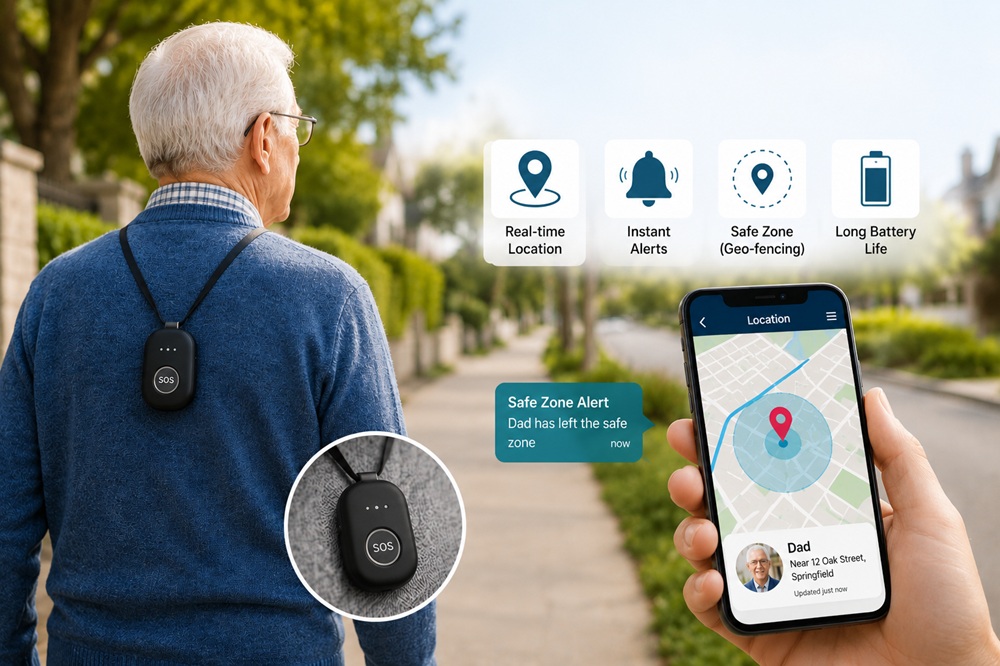
GPS tracking devices designed for dementia safety may include:
- Wristbands
- GPS pendants
- Smartwatches
- Shoe-based trackers
- Geofencing alerts
Some tools notify carers if someone moves outside a predefined safe area.
The Dementia UK advice on supporting families affected by wandering behaviours can help families understand behavioural triggers alongside technology solutions.
Technology may improve response times, but understanding why wandering happens remains equally important.
- Medication reminder technology
Missed or incorrect medication can create serious risks.
For people living with dementia, challenges may include:
- Forgetting doses
- Taking medication twice
- Becoming confused by packaging
- Ignoring reminders due to distress or misunderstanding
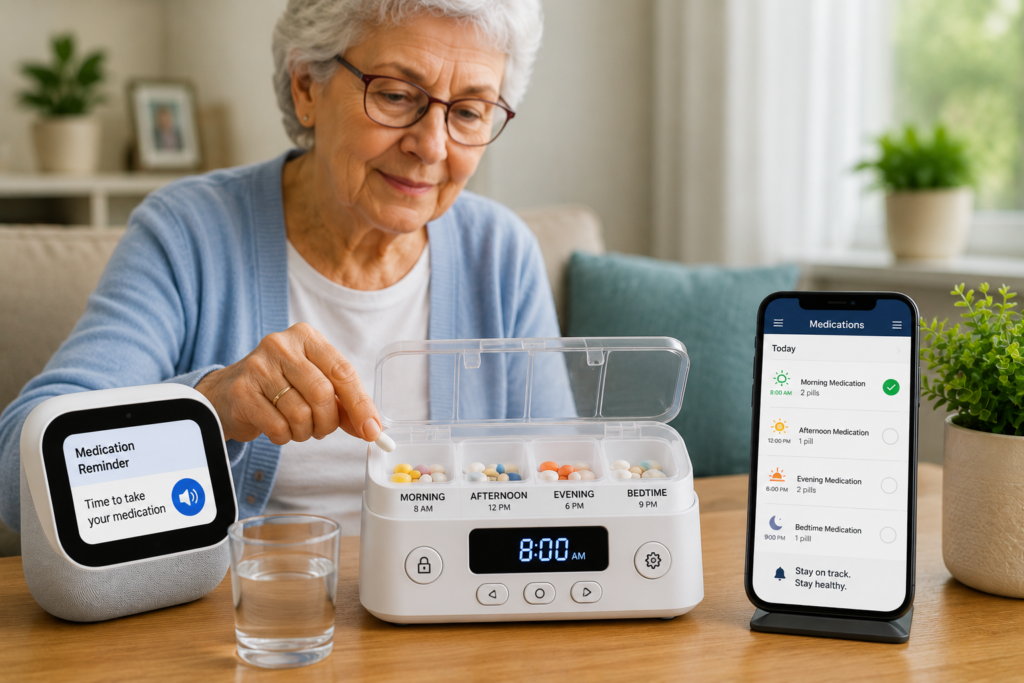
Medication technology options include:
- Automated pill dispensers
- Voice reminder devices
- Smartphone alerts for carers
- Smart medication tracking systems
Medication confusion can also become a concern after illness or hospital discharge.
If you missed our previous article, read our guide on safe hospital discharge for people with dementia.
The NHS advice on managing medicines safely offers practical guidance for families supporting medication routines.
- AI companions and conversational technology
This is where things become more complex.
AI-powered companion tools are becoming increasingly visible in dementia care discussions.
These may include:
- Voice assistants
- Chat based AI companionship
- Reminder assistants
- Conversational engagement tools
- Smart prompts for routines
Potential benefits:
- Reduced loneliness
- Simple reminders
- Engagement through conversation
- Orientation prompts (“today is Tuesday”)
- Help initiating routines
However, families should approach this thoughtfully.
AI can:
✔ support routines
✔ provide prompts
✔ offer light interaction
But AI can’t:
✘ provide emotional judgement
✘ recognise complex distress reliably
✘ replace human reassurance
✘ make safeguarding decisions
✘ deliver compassionate physical care
The NICE dementia care guidance continues to emphasise person-centred care.
Technology should support human care, not replace it.
- Smart technology for dementia: Home safety tools that can help
For many families, smart technology for dementia provides reassurance without feeling intrusive.
Examples include:
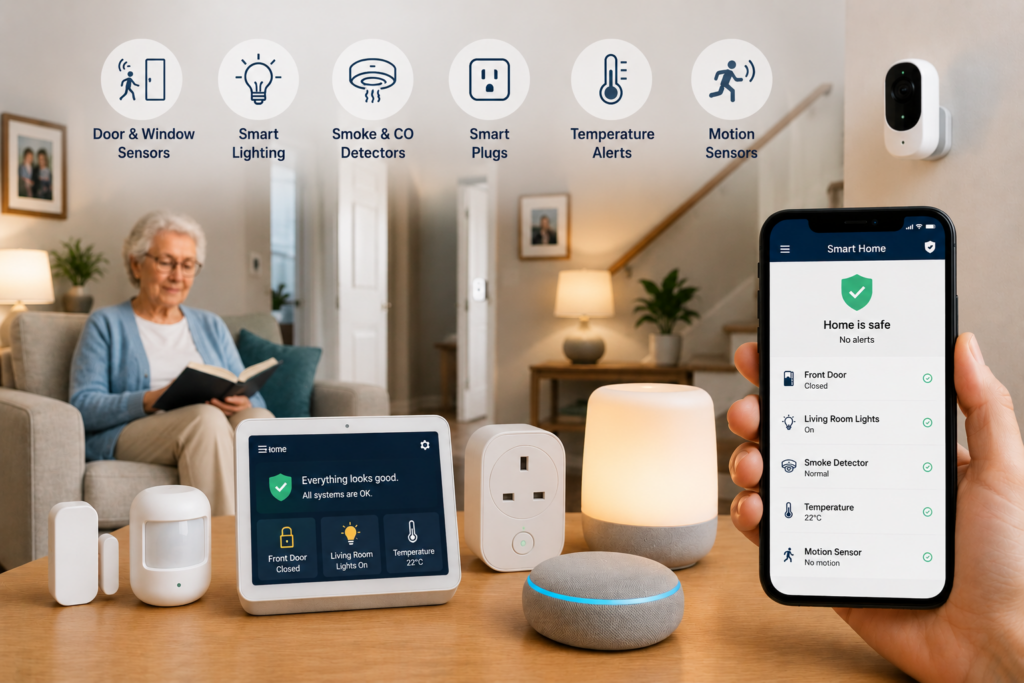
- Motion-activated lights
- Smart door sensors
- Stove safety shut-off devices
- Smart plugs
- Temperature alerts
- Door exit alarms
These can help reduce risks linked to:
- Night-time wandering
- Poor lighting
- Forgotten appliances
- Unnoticed movement
This also connects directly to the home safety risks discussed in our recent falls prevention dementia guide.
- Remote monitoring tools for family carers
For families balancing caregiving with work or distance, remote monitoring can offer reassurance.
For families balancing caregiving with work or distance, remote monitoring can offer reassurance.
Examples:
- Activity dashboards
- Motion monitoring
- Sleep pattern alerts
- Daily routine tracking
- Emergency notification systems
These tools can help identify:
- Unusual inactivity
- Changes in movement
- Altered sleep patterns
- Potential emergencies
For some families, this reduces anxiety significantly.
But monitoring should be balanced with dignity and consent.
Privacy considerations families should understand
This is one of the most important conversations.
Before introducing technology, families should consider:
Consent
Can the person understand and agree to monitoring?
Data security
Where is personal data stored?
Device access
Who can see alerts, recordings, or activity logs?
Ethical considerations
Is the technology supporting independence, or creating unnecessary surveillance?
The Information Commissioner’s Office guidance on privacy and data protection can help families understand responsibilities when using monitoring technology.
Trust matters.
When technology is not enough
Technology can improve awareness.
It cannot provide:
- Clinical judgement
- Physical assistance
- Emergency transport
- Safe transfers
- Dementia-aware emotional support
For example:
A fall alert may notify a carer.
But someone may still need:
- urgent medical assessment
- safe transport
- hospital transfer
- discharge support
- reassurance during movement
This is where specialist human support remains essential.
Team Medic’s specialist patient transport services can help families where safe transport, mobility support, and dementia-aware care are needed.
Technology and emergency preparedness
Technology can support prevention.
But emergencies still happen.
That’s why families should also have a clear response plan.
If you haven’t already, read: what to do before an ambulance arrives for someone with dementia.
Preparation matters.
A balanced view: technology + human care
The most effective dementia care rarely comes down to one single solution.
Technology can:
✔ improve visibility
✔ reduce some risks
✔ support routines
✔ help carers respond faster
Human care provides:
✔ emotional reassurance
✔ nuanced judgement
✔ safeguarding
✔ physical assistance
✔ compassionate support
The best outcomes often come from combining both.
FAQs about AI and Dementia Safety
AI can support some aspects of dementia care, such as reminders, monitoring, and routine prompts. However, it should complement, not replace, human care.
This depends on individual needs, but common tools include:
* fall detection devices
* GPS trackers
* medication reminders
* door sensors
* smart lighting
* emergency alert systems
GPS trackers can be helpful where wandering is a concern, provided families consider consent, dignity, and privacy carefully.
No. Technology can support safety and communication, but it cannot replace emotional care, safeguarding, or physical assistance.
Privacy depends on the system used, how data is stored, and who has access.
Families should review privacy policies carefully before installing monitoring devices.
Final thoughts
Smart technology for dementia is evolving quickly, giving families new ways to improve safety, support independence, and gain peace of mind at home.
For many households, the right combination of fall detection tools, medication reminders, GPS tracking, and smart home safety devices can make everyday life feel safer and more manageable.
However, technology works best when paired with thoughtful, compassionate human care and professional support where needed.
Because when dementia care becomes complex, people still matter most.