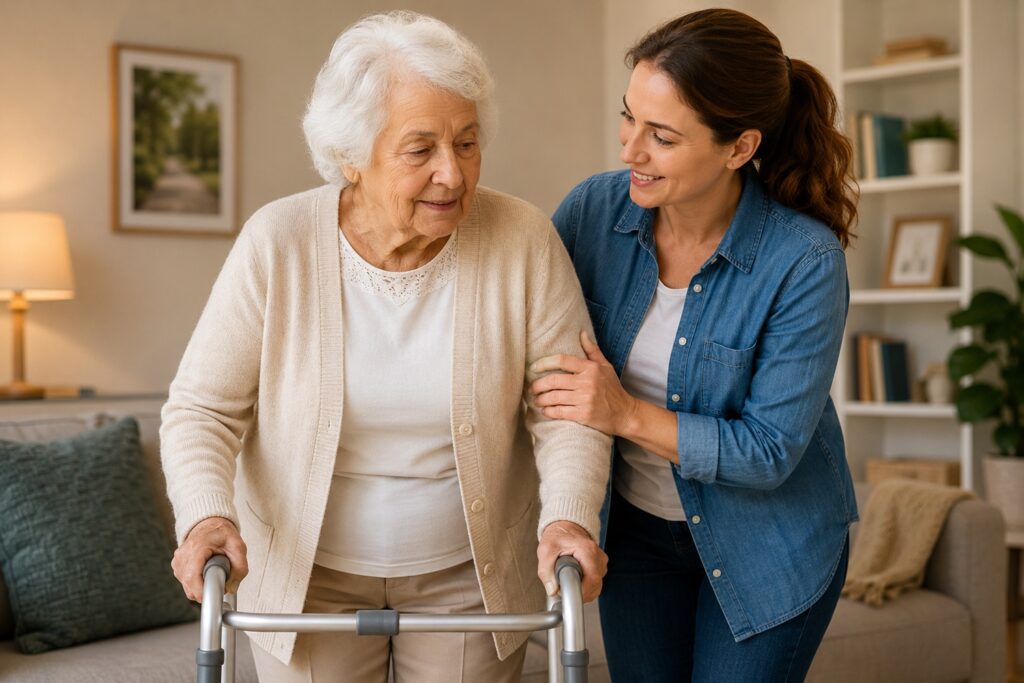
Falls are one of the most common reasons people living with dementia are admitted to hospital and often, they are preventable.
After a hospital stay, the risk can increase even further due to reduced mobility, confusion, or changes in routine. If you haven’t already, you may find it helpful to read our previous guide on safe recovery after discharge.
Understanding the hidden risks at home can help families reduce accidents, avoid emergency situations, and support safer, more confident daily living.
Why falls are more common in people living with dementia
People living with dementia often experience changes that increase fall risk, including:
- Reduced balance and coordination
- Difficulty recognising hazards
- Changes in vision or perception
- Medication side effects
- Confusion about surroundings
Falls are a major health concern in older adults. According to the NHS guidance on falls prevention, falls are the most common cause of injury-related hospital admissions in people over 65.
For someone with dementia, this risk is even higher, especially during periods of change, such as after illness or hospitalisation.
Clutter and trip hazards in familiar spaces
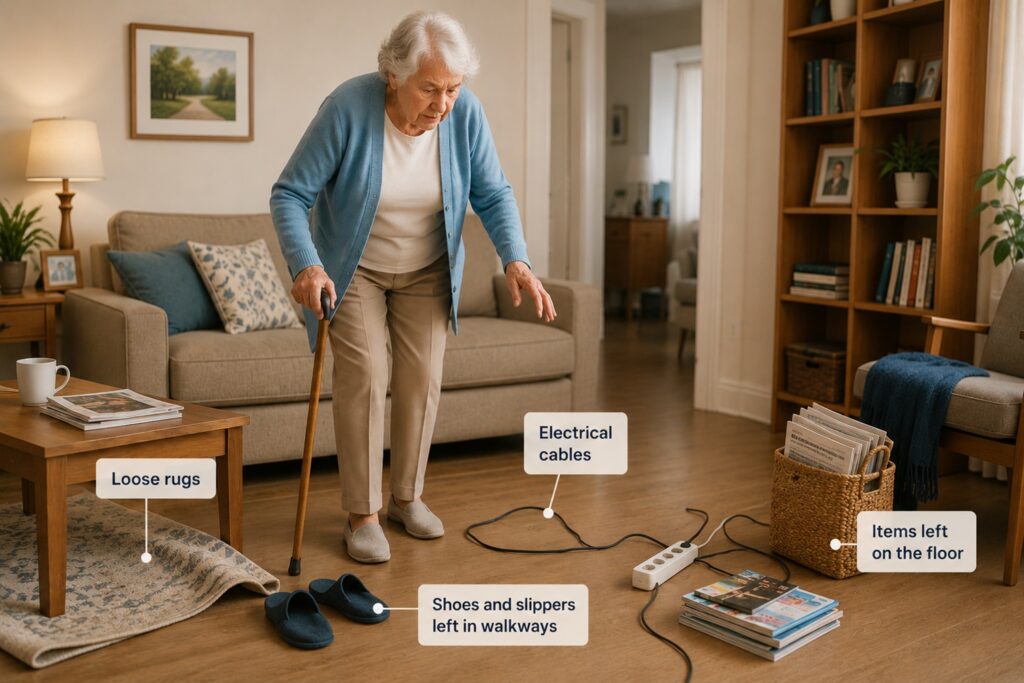
Even familiar environments can become unsafe.
Common risks include:
- Loose rugs
- Electrical cables
- Shoes left in walkways
- Small furniture in narrow spaces
As dementia progresses, the ability to judge distance and obstacles may reduce.
What helps:
- Keep walkways clear
- Remove unnecessary furniture
- Secure rugs or remove them entirely
- Ensure commonly used paths are easy to navigate
Poor lighting and shadows
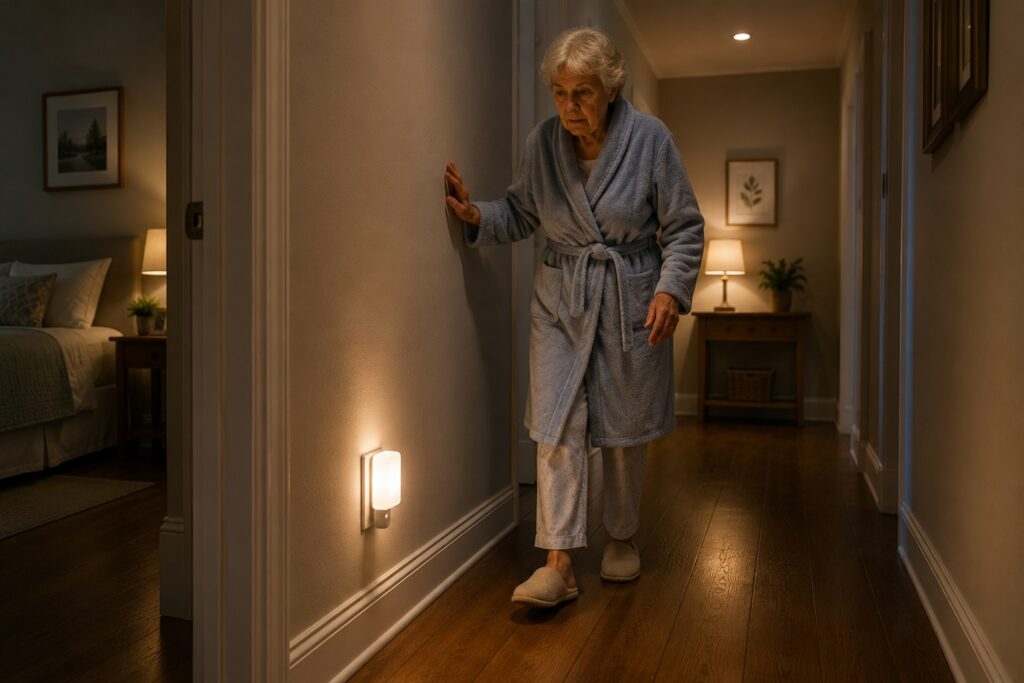
Lighting plays a bigger role than many families realise.
Shadows, glare, and dim spaces can cause:
- Misinterpretation of objects
- Fear or hesitation when walking
- Increased risk of trips or missteps
The Alzheimer’s Society highlights the importance of good lighting for people with dementia to reduce confusion and improve safety.
What helps:
- Use consistent lighting throughout the home
- Add night lights in hallways and bathrooms
- Avoid harsh contrasts or glare
Bathroom hazards (often overlooked)
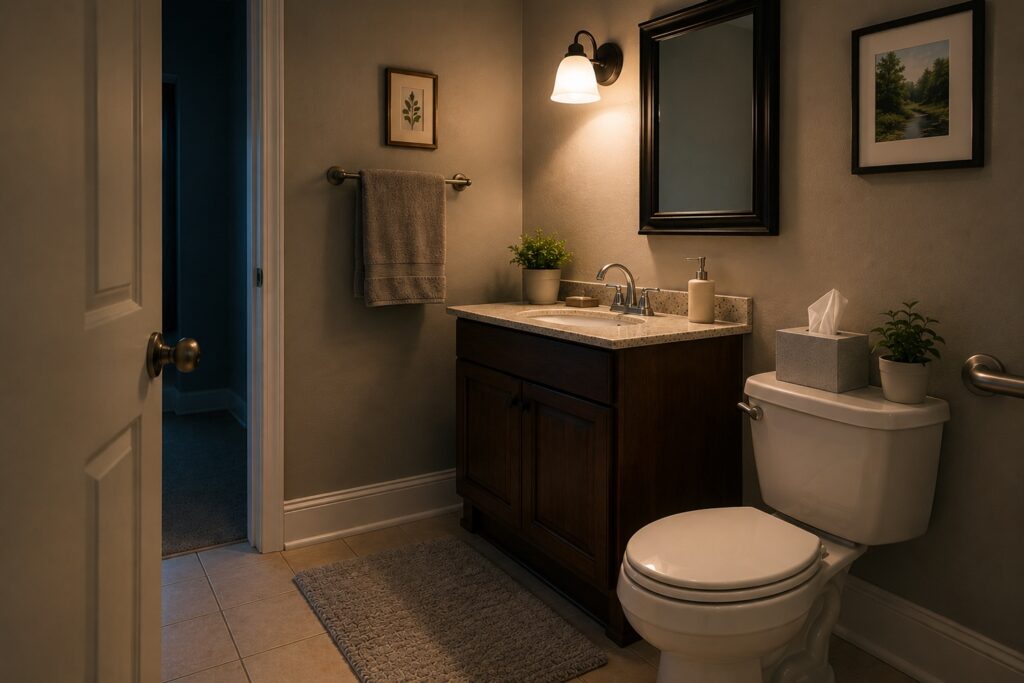
Bathrooms are one of the highest-risk areas.
Risks include:
- Wet floors
- Slippery surfaces
- Difficulty getting on/off the toilet
- Lack of support when standing
What helps:
- Install grab rails
- Use non-slip mats
- Consider raised toilet seats
- Keep essentials within easy reach
Changes in mobility after illness or hospital stay
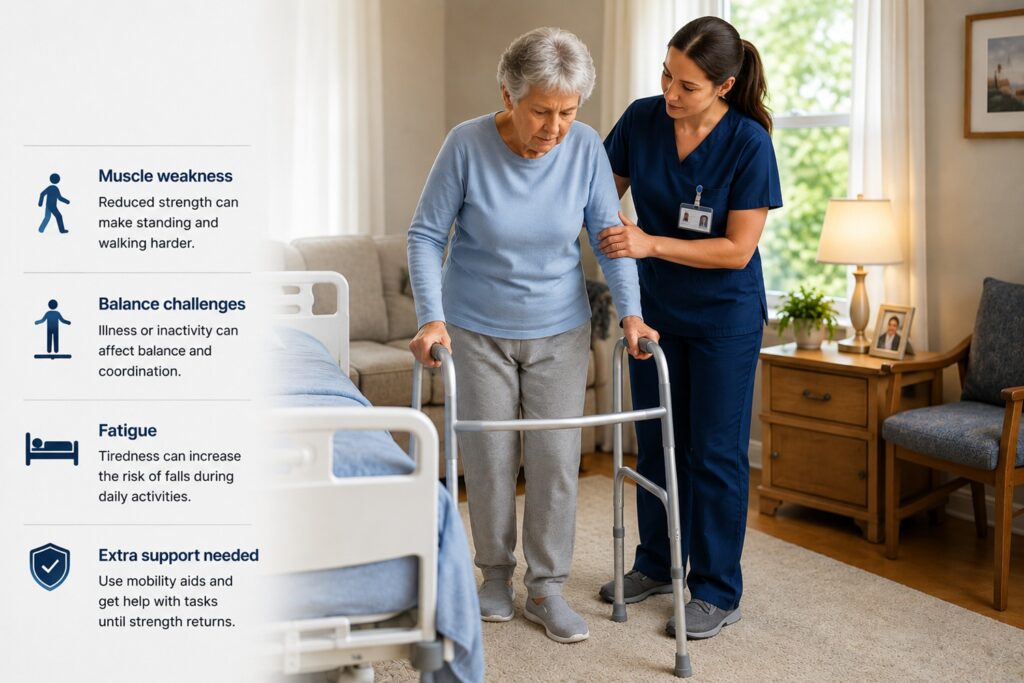
After a hospital visit, strength and balance can decline quickly.
This is known as deconditioning, where even a short stay can reduce mobility.
As discussed in our previous article on hospital discharge and recovery for dementia patients.
The first few days at home are especially important for monitoring changes.
According to NHS falls prevention guidance, reduced strength after illness significantly increases fall risk.
What helps:
- Encourage gentle movement where appropriate
- Avoid rushing
- Ensure walking aids are used correctly
- Monitor closely in the first 72 hours
Medication side effects and dizziness
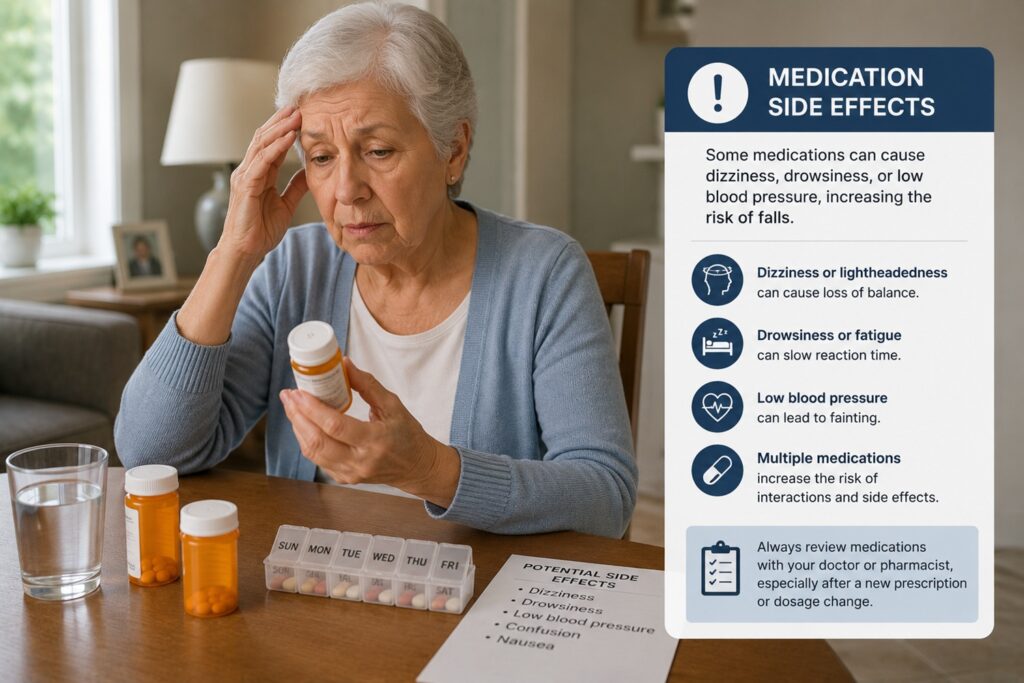
Some medications can cause:
- Drowsiness
- Dizziness
- Drop in blood pressure
- Slower reaction times
Medication-related falls are a recognised issue. The NHS advises reviewing medications regularly to reduce fall risk.
What helps:
- Review medications after discharge
- Watch for new side effects
- Speak to a GP or pharmacist if concerned
Night-time wandering and disorientation
Many people with dementia experience:
- Restlessness at night
- Keep paths to the bathroom clear
- Maintain a consistent bedtime routine
- Consider monitoring or alert systems
Rushing or not asking for help
Many falls happen when someone tries to move quickly or independently when they need support.
They may:
- Forget their limitations
- Feel embarrassed asking for help
- Attempt to stand too quickly
What helps:
- Encourage a calm pace
- Offer regular reassurance
- Position frequently used items within reach
- Gently remind them to ask for help
What should you do if a fall happens?
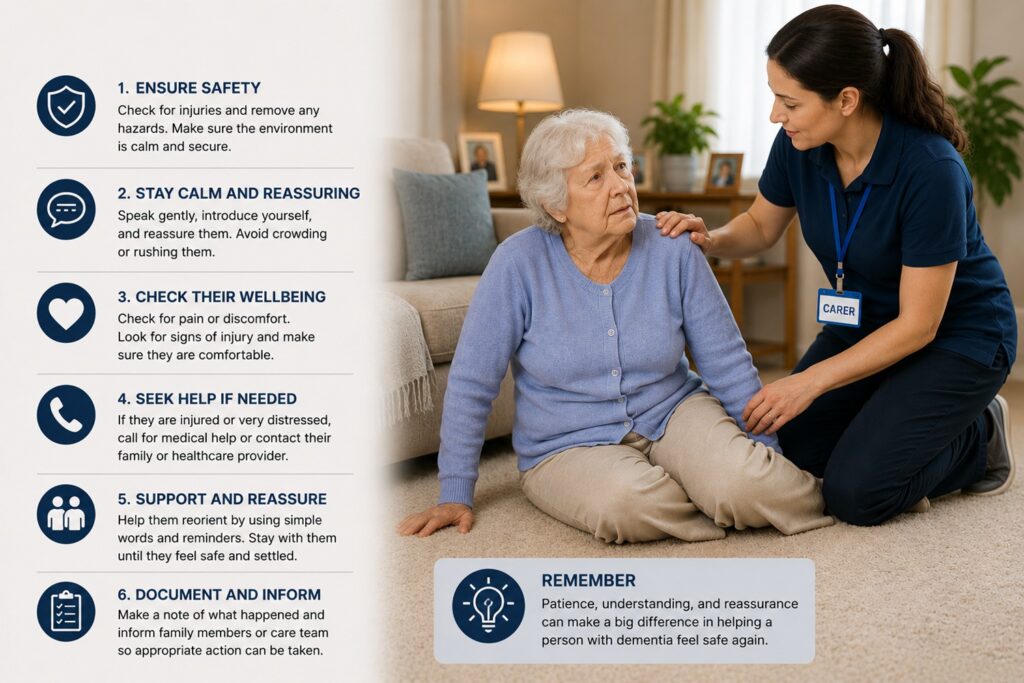
Even with precautions, falls can still occur.
If someone with dementia falls:
- Stay calm and reassure them
- Check for injuries before moving them
- Avoid rushing to lift them
- Call for medical help if needed
If the person is unresponsive or not breathing normally, the priority changes. Our Primary Survey First Aid guide explains the structured checks used to identify immediate threats to life.
You may also find our emergency guide helpful: 5 things to do before an ambulance arrives for someone with dementia (UK guide for families & caregivers)
According to the NHS advice on what to do after a fall, monitoring for delayed symptoms is important, especially in older adults.
The hidden risk: long lies after a fall
One of the most serious but often overlooked risks is a long lie – when someone is unable to get up after a fall.
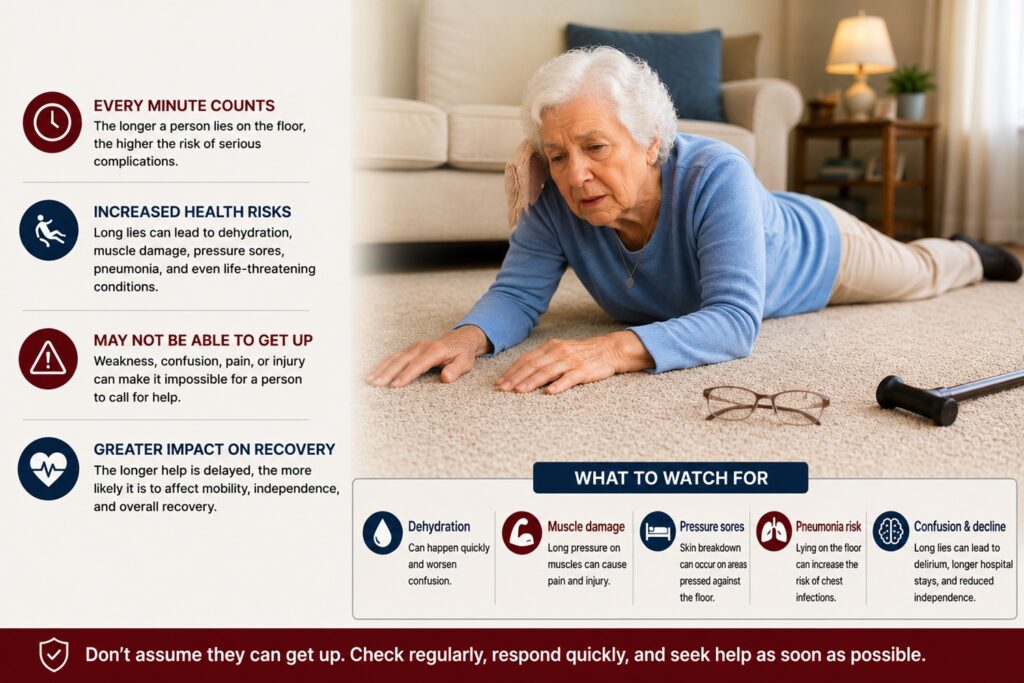
This can lead to:
- Dehydration
- Pressure sores
- Hypothermia
- Increased risk of hospitalisation
We explore this in more detail here: Elderly falls: The hidden crisis of long lies and how care providers can respond.
Reducing fall risk is important, but reducing the time someone remains on the floor is just as critical.
How specialist patient transport can help after a fall
If a fall results in reduced mobility or distress, getting to hospital or back home safely is essential.
Specialist transport can support:
- Safe, non-emergency transfers
- Support for mobility needs
- Calm, dementia-aware communication
- Reduced distress during travel
Families arranging follow-up care or hospital visits may benefit from specialist patient transport support for people with dementia, particularly where reassurance and clinical assistance are needed.
Can technology help prevent falls?
Some families use:
- Fall detection sensors
- Motion alerts
- Smart lighting
- Monitoring devices
Organisations such as Dementia UK provide guidance on using technology to support safety at home.
A gentle reminder for families
Preventing falls is not about removing independence, it’s about creating a safer environment.
Small changes can make a big difference:
- Better lighting
- Clear spaces
- Calm routines
- Ongoing awareness
You don’t need to do everything at once.
Even one or two changes can help reduce risk and support safer daily living.
FAQs about falls and Dementia
People with dementia may have reduced awareness of hazards, changes in balance, and confusion about their environment. According to the NHS falls prevention guidance, these factors significantly increase fall risk.
Common risks include clutter, poor lighting, bathroom hazards, and changes in mobility after illness or hospitalisation.
Stay calm, check for injuries, and avoid moving the person too quickly. Follow NHS guidance on what to do after a fall and seek medical help if needed.
Not always, but many falls can be reduced with simple environmental changes and regular monitoring.
A long lie happens when someone cannot get up after a fall. It can lead to serious complications. Learn more in our guide to long lies and elderly falls: Elderly falls: The hidden crisis of long lies and how care providers can respond