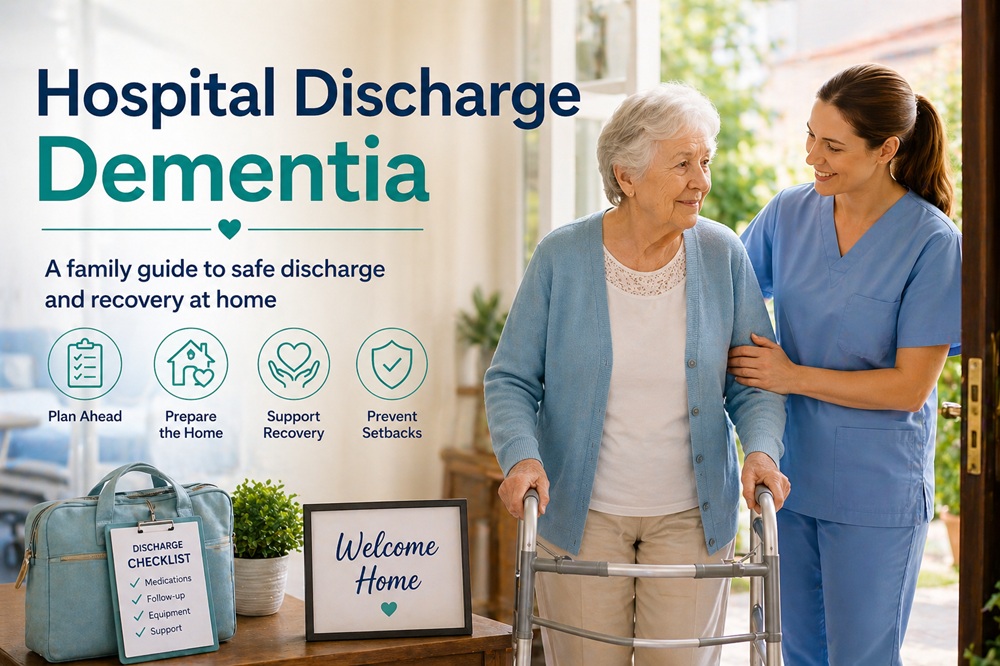
Hospital discharge dementia planning can be overwhelming for families. When a loved one with dementia is ready to leave hospital, the real challenges often begin after discharge.
Moving from hospital back home (or into a care setting) can be disorientating for someone living with dementia. Changes in routine, unfamiliar medications, reduced mobility, hospital-related delirium, and the stress of transition can all increase confusion and raise the risk of setbacks. Hospital-related delirium and cognitive decline after admission are well recognised risks in older adults, including those living with dementia, according to the NHS guidance on delirium.
That’s why a safe hospital discharge plan for someone with dementia matters.
Whether your loved one has been admitted after a fall, infection, illness, or emergency, knowing what to expect after a hospital stay can help reduce anxiety, prevent avoidable readmission, and support a safer recovery.
If you haven’t already read our guide on preparing during a medical emergency, start with our related article: 5 things to do before an ambulance arrives for someone with dementia.
What happens when someone with dementia is discharged from hospital?
Hospital discharge does not mean someone has fully recovered.
It usually means they are considered medically stable enough to continue recovery outside an acute hospital setting, this reflects the NHS England discharge to assess model, which supports recovery outside hospital where appropriate.
For someone with dementia, discharge may involve:
- Returning home with family support
- Going home with reablement or community support
- Returning to a care home with updated care needs
- Short-term rehabilitation or step-down support
- Ongoing assessments for longer-term care needs
A safe discharge should include:
- A clear discharge plan
- Medication review
- Follow up appointments
- Equipment or adaptations, if needed
- Support arrangements for recovery at home
- Involvement of family or carers in planning
Families can also review guidance from the Alzheimer’s Society on hospital discharge for people with dementia for additional support.
Why can hospital stays make dementia symptoms worse?
Families are often surprised to find their loved one seems more confused after hospital.
This can happen for several reasons:
- Unfamiliar environments can increase distress
- Disrupted routines may worsen cognitive symptoms
- Infection or illness can affect thinking
- Delirium can occur during or after hospitalisation
- Reduced mobility can lead to rapid deconditioning
The Alzheimer’s Society notes hospital stays can increase confusion and distress for people with dementia, particularly when routines are disrupted.
This does not always mean permanent decline, but it does mean extra support during recovery is important.
Questions families should ask before hospital discharge
Before leaving hospital, consider asking
- Is my loved one safe to return home?
Ask how mobility, cognition, personal care, and safety have been assessed.
2. Has their medication changed?
Confirm:
- New medications
- Changed dosages
- Side effects to monitor
- Whether prescriptions are ready
Medication problems are a recognised contributor to avoidable readmissions, as highlighted in Age UK’s hospital discharge guidance
3. What support will be in place at home?
Ask about:
- Community nursing
- Reablement services
- Occupational therapy
- Home care support
- Follow-up appointments
4. Is any equipment needed before discharge?
Examples:
- Walking aids
- Grab rails
- Toilet frames
- Pressure-relief equipment
5. Who do I contact if problems arise after discharge?
Always leave with clear contact details.
Hospital discharge dementia checklist for families
Before going home, try to have these ready:
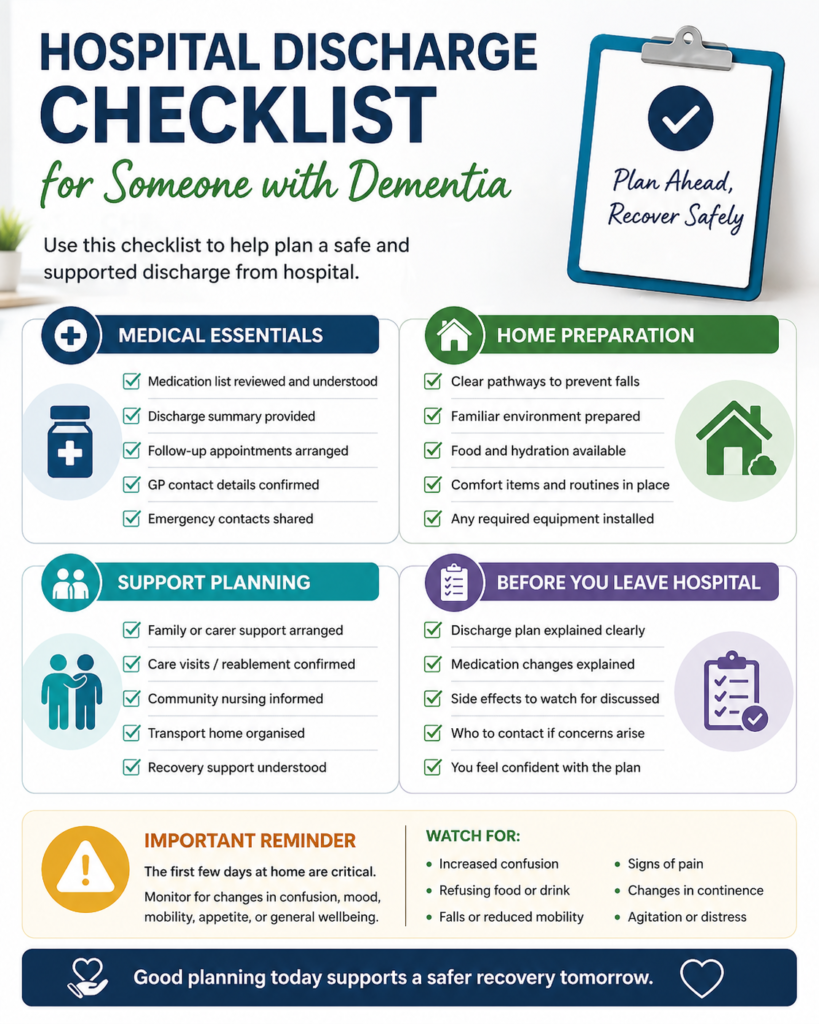
Medical essentials
- Medication list
- Discharge summary
- Follow-up appointments
- GP details
- Emergency contacts
Home preparation
- Clear pathways to prevent falls
- Familiar environment prepared
- Food and hydration available
- Comfort items nearby
- Any required equipment installed
Support planning
- Family support arranged
- Care visits confirmed
- Transport home organised
- Recovery support understood
If transport home requires extra assistance, specialist patient transport services can help support a safer, more comfortable transition from hospital to home, particularly for individuals living with dementia who may need additional reassurance, mobility support, or dementia-aware care during the journey.
How to support recovery in the First 72 hours

The first few days matter.
Watch for:
- Increased confusion
- Refusing food or drink
- Falls or reduced mobility
- Signs of pain
- Changes in continence
- Difficulty managing medications
- Agitation or distress
The Alzheimer’s Society advises monitoring for sudden changes in condition after discharge, especially where delirium or infection may be contributing factors.
Keep routines as familiar as possible:
- Maintain normal mealtimes
- Use calm communication
- Reduce noise and overstimulation
- Encourage rest
- Reintroduce familiar objects and routines
These same calming principles also support emergency situations, as covered in our article 5 things to do before an ambulance arrives for someone with dementia.
Warning signs of an unsafe hospital discharge
Sometimes families feel something is not right.
Possible warning signs include:
- No clear discharge plan
- No support arranged despite obvious needs
- Sudden pressure to leave hospital
- Medication instructions unclear
- Cognitive needs overlooked
- No assessment of whether home is safe
If you are concerned, ask to speak to:
- The ward nurse
- Discharge coordinator
- Hospital safeguarding team
- Social worker
Families have a right to raise concerns about unsafe discharge if proper support arrangements are not in place. Guidance on patient rights during hospital discharge also supports families raising concerns where support arrangements appear unsafe.
How specialist patient transport can support hospital discharge
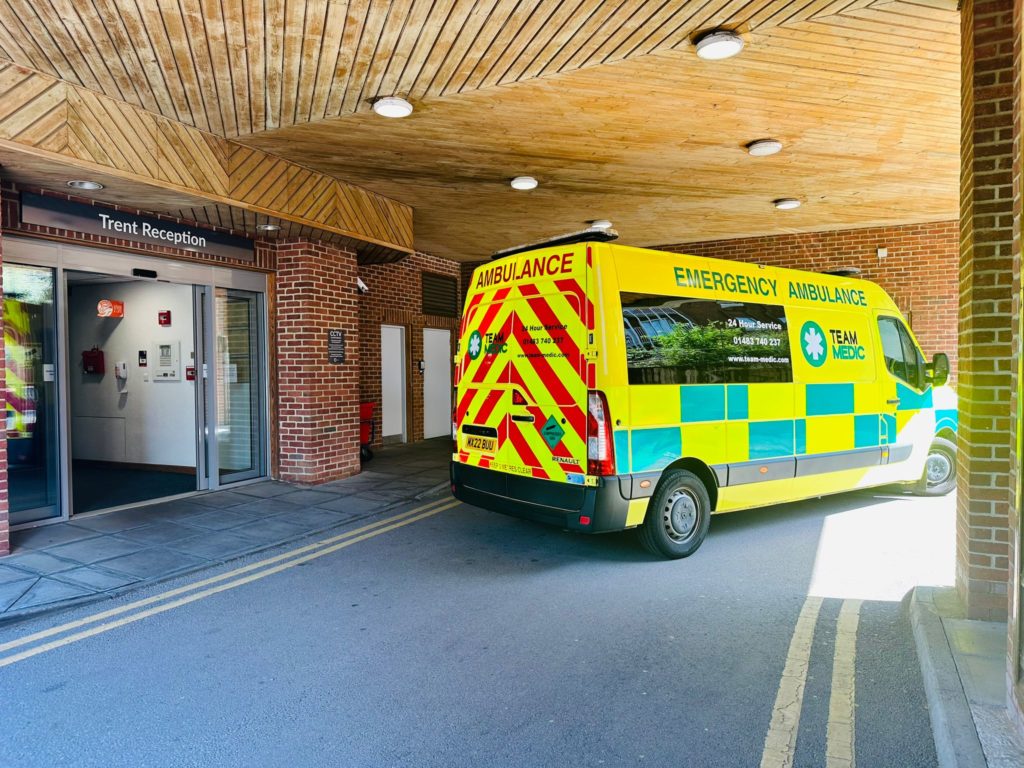
For some people living with dementia, getting home safely is part of recovery. Families may also find support through Dementia UK’s practical advice for families after hospital stays helpful alongside discharge planning.
Specialist transport can help support:
- Comfortable non-emergency discharge transport.
- Safe transfers to care settings.
- Additional support for mobility needs
- Calm, dementia-aware communication during transit
- Reduced distress during transitions
For families concerned about the journey home, specialist patient transport services can provide added reassurance, particularly where mobility issues, confusion, or complex medical needs make standard transport more difficult.
If your loved one is moving from hospital into residential care or another healthcare setting, support with care home transfers may also help make that transition safer and less stressful.
For situations where a hospital discharge does not require emergency transport but extra clinical support is still needed, our non-emergency ambulance services can help support safe and comfortable transport home.
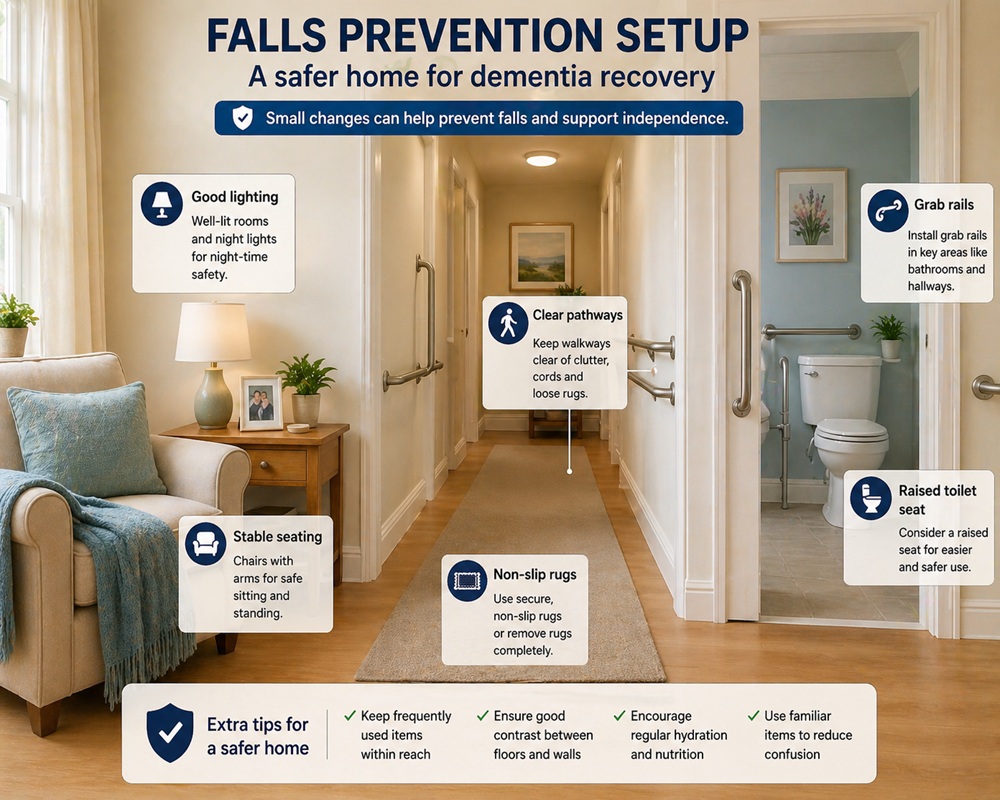
What about falls risk after hospital?
Hospital stays can sometimes increase weakness and instability.
This is why falls prevention should be part of recovery planning.
Can technology help after hospital discharge?
Some families also use:
- Medication reminders
- Fall sensors
- Wandering alerts
- Smart monitoring tools
A gentle reminder for families
If discharge feels overwhelming, that’s understandable.
There is a lot to think about; medications, safety, transport, follow-up, and often difficult decisions about care.
But small steps matter.
Asking questions, preparing the home, watching for warning signs, and keeping routines familiar can make recovery safer and less stressful.
You do not have to manage it all alone. Organisations such as Age UK’s support for family carers can also help families navigating recovery after discharge.
FAQS about dementia and hospital discharge
Hospital stays can sometimes worsen confusion temporarily due to stress, illness, or delirium in people with dementia, which NHS guidance identifies as common in older patients during or after hospital admission.
Raise concerns immediately with the ward nurse or discharge coordinator and ask for a reassessment if safety concerns remain.
Recovery varies. Some people improve within days, while others need weeks of support and monitoring.
Common risks include falls, medication errors, worsening confusion, dehydration, and avoidable readmission.
If mobility, confusion, or distress may make travel difficult, planning transport in advance can help make discharge safer and calmer.