If someone collapses in front of you and stops breathing normally, the next few minutes matter more than almost anything else in their life. Knowing how to do CPR gives you the power to keep blood moving to their brain and heart until professional help arrives.
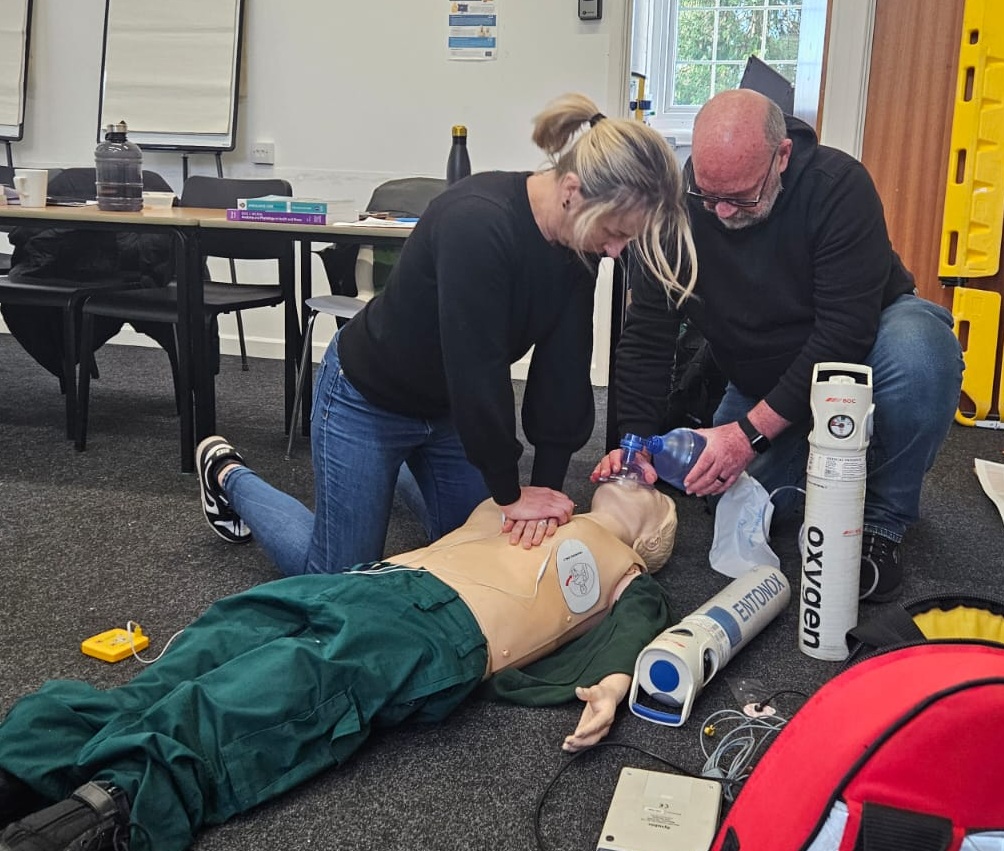
At Team Medic, our clinicians and event medics are trained and equipped to recognise cardiac arrest, perform CPR, and use defibrillators as part of their clinical roles. This guide breaks the process down into the same steps we train our own teams on, so you can act with confidence if you’re ever first on scene.
This guide explains CPR for adults. CPR for babies and children uses different techniques. If you need guidance on paediatric resuscitation, see Resuscitation Council UK’s paediatric basic life support guidelines.
In an emergency, always call 999 or 112 immediately and start CPR without delay. This article is for information only and does not replace hands on first aid training.
What is CPR?
CPR stands for cardiopulmonary resuscitation. It’s a combination of chest compressions and, where possible, rescue breaths, used when someone’s heart has stopped pumping blood effectively, known as cardiac arrest.
This guide follows Resuscitation Council UK’s 2025 Adult Basic Life Support guidelines. Performed quickly, CPR keeps a small amount of oxygenated blood flowing to the vital organs. This buys precious time until professional help arrives and a defibrillator can be used to analyse the heart rhythm and, where appropriate, deliver a shock.
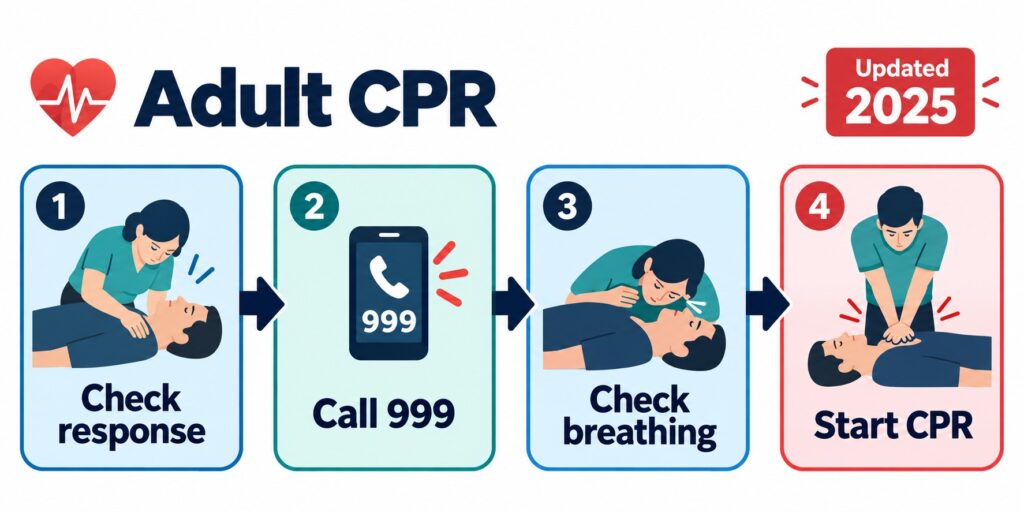
How to do CPR: Step by step
- Check for a response
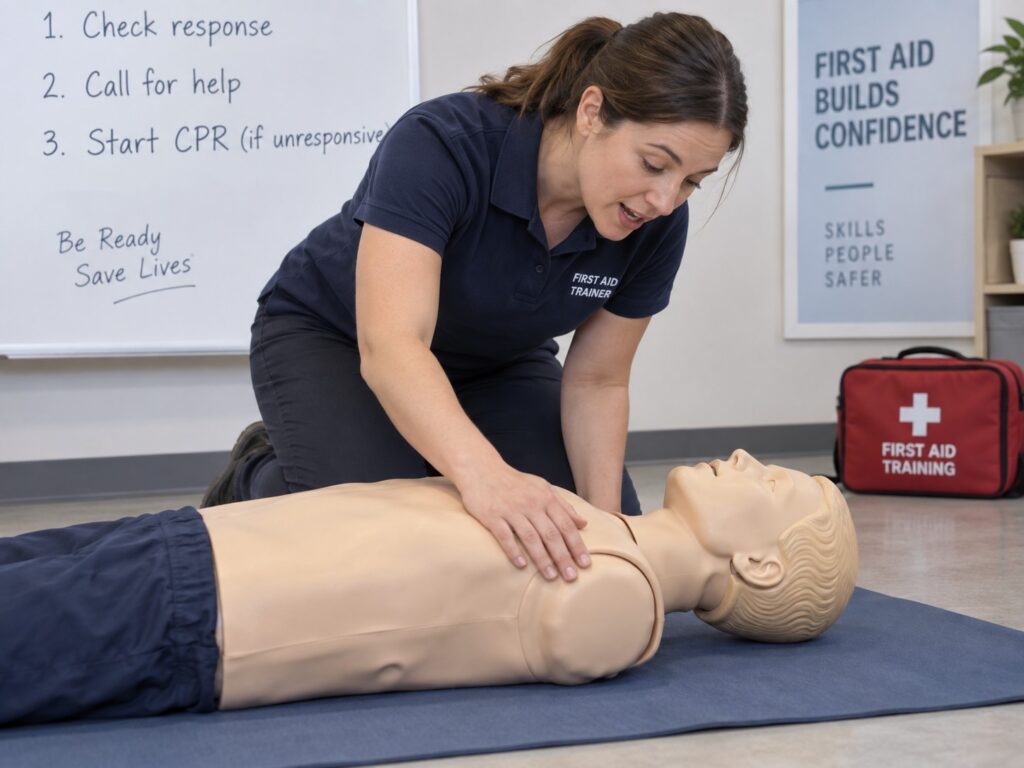
First, make sure the area is safe to approach. Then check whether the person responds: kneel beside them, gently shake their shoulders, and ask loudly, “Are you okay?” These initial checks form part of a structured primary survey used to identify immediate threats to life before moving on to further assessment or treatment.
A word of caution: occasional gasping or irregular snorting can happen in the early moments of cardiac arrest. Don’t mistake this for normal breathing – treat it as a sign to start CPR.
- Call 999 immediately
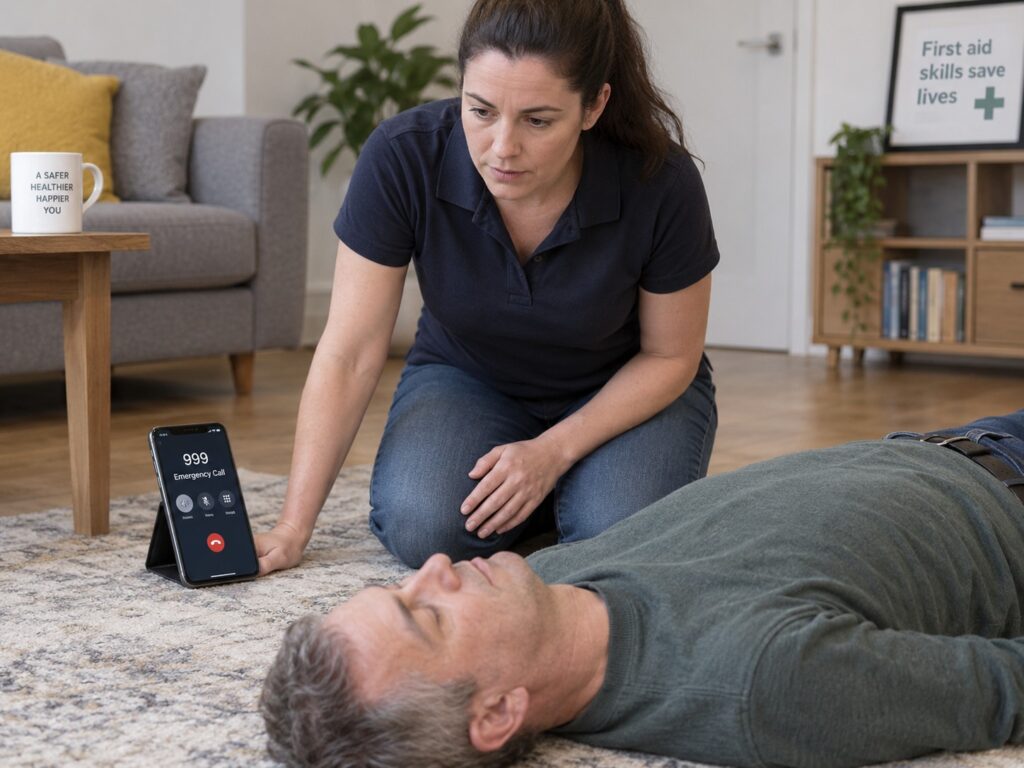
If there’s no response, shout for help and call 999 straight away – before you assess their breathing.
- If someone else is nearby, ask them to make the call while you continue checking the person. Ask them to put the call on speakerphone so you can hear the ambulance controller while you work.
- If you’re alone, use your phone’s hands-free speaker function so you can talk to the call handler while you continue the assessment, rather than pausing to dial separately.
- Open the airway and check breathing
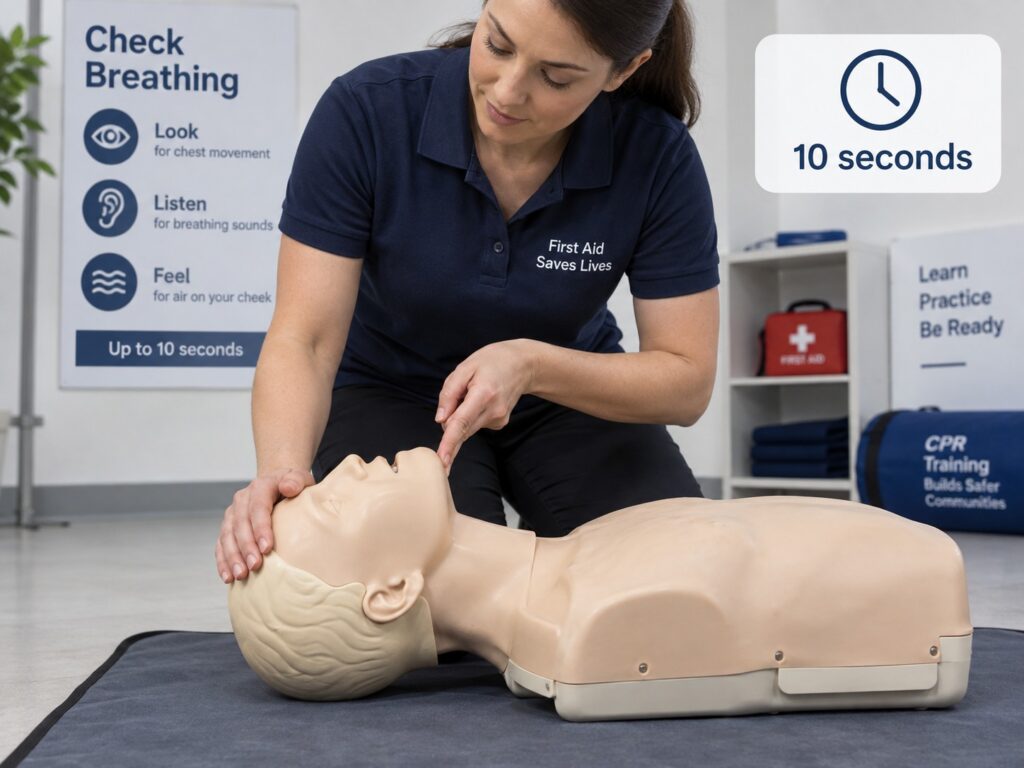
While waiting for the call to be answered, open the airway by tilting the head gently backwards and lifting the chin. Look, listen, and feel against their mouth for up to 10 seconds to check for normal breathing.
A word of caution: slow, laboured, gasping, or panting breathing can happen in the early moments of cardiac arrest. Don’t mistake this for normal breathing – if breathing isn’t normal, assume cardiac arrest and start CPR.
- Get a defibrillator on its way
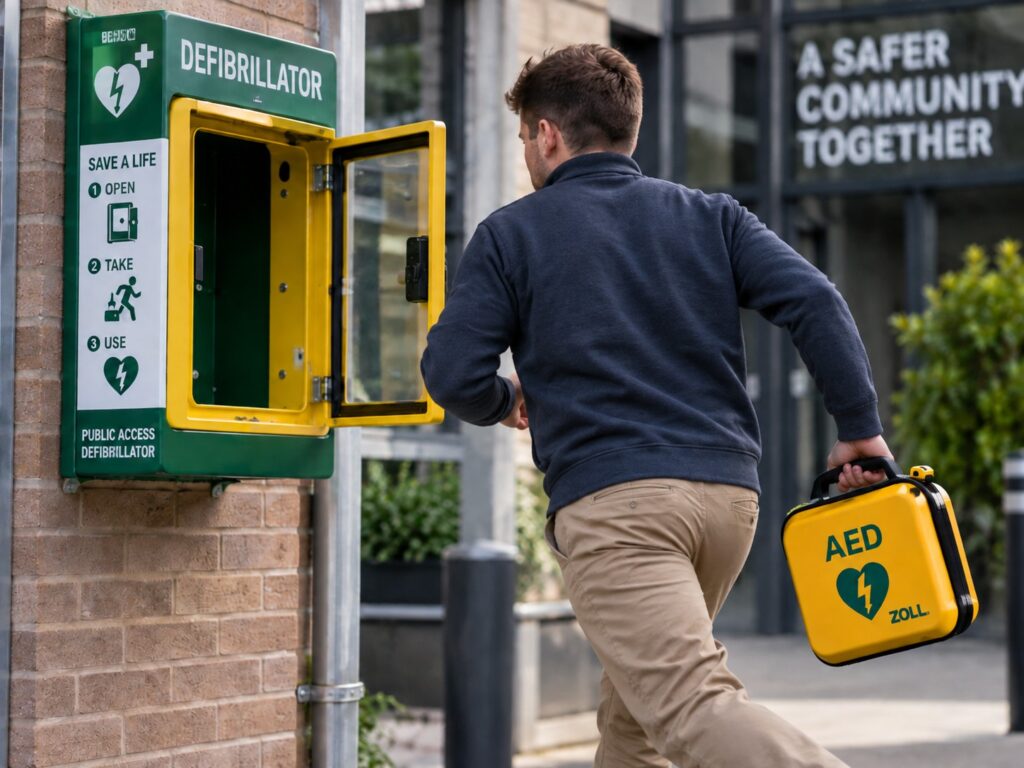
If a helper is present, ask them to fetch a defibrillator if one is available, alongside making the 999 call. The ambulance controller can direct them to the nearest one.
If you’re alone, don’t leave the person to search for a defibrillator unless one is immediately accessible. Prioritise calling 999 and starting CPR – if other people arrive, send one of them to fetch the AED.
- Start chest compressions
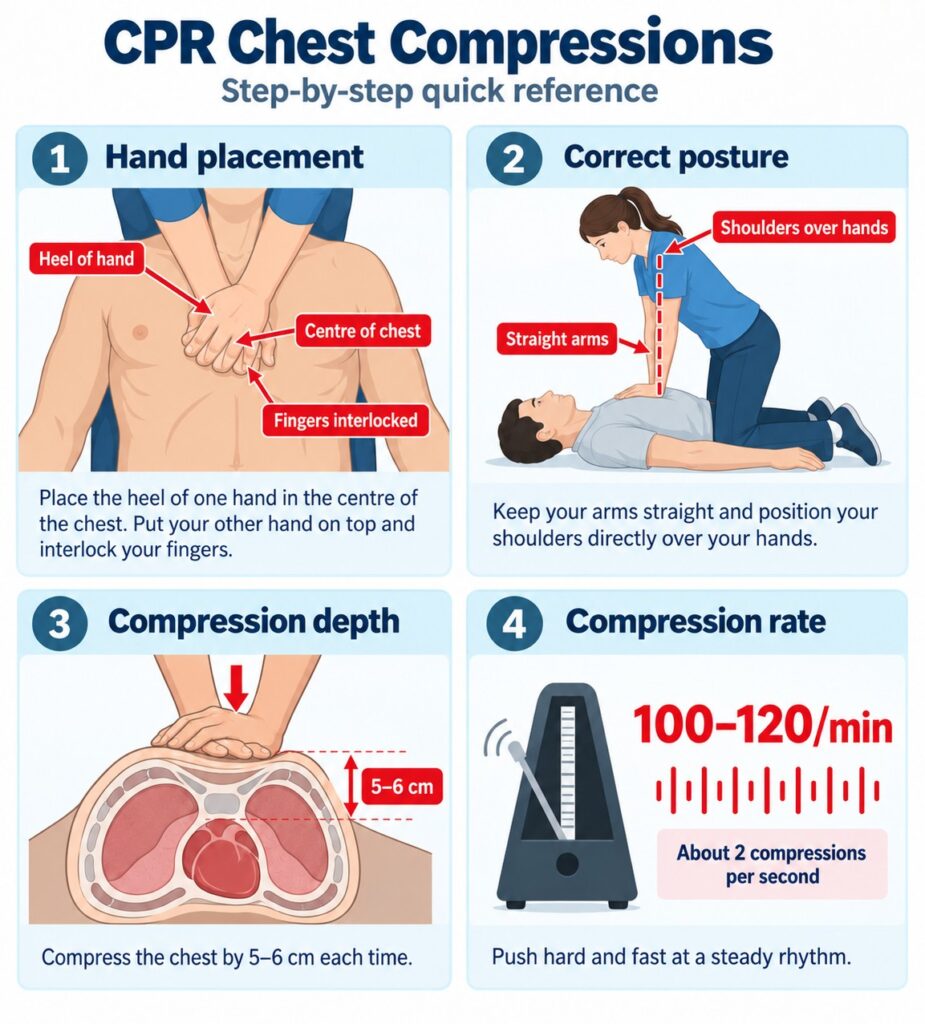
Chest compressions are the core of CPR, and getting the technique right makes a real difference.
- If it’s safe to do so, move the person onto a firm, flat surface.
- Kneel beside them and place the heel of one hand in the centre of their chest. Place your other hand on top and interlock your fingers if you can.
- Keep your arms straight and your shoulders directly over your hands.
- Push down firmly to a depth of around 5-6cm, then let the chest rise fully before the next push.
- Aim for a steady rate of 100 to 120 compressions per minute – roughly the tempo of the song “Stayin’ Alive.”
- If you’re on the phone to ambulance control, they’ll help pace you and talk you through every step.
- Add rescue breaths, if you’re able
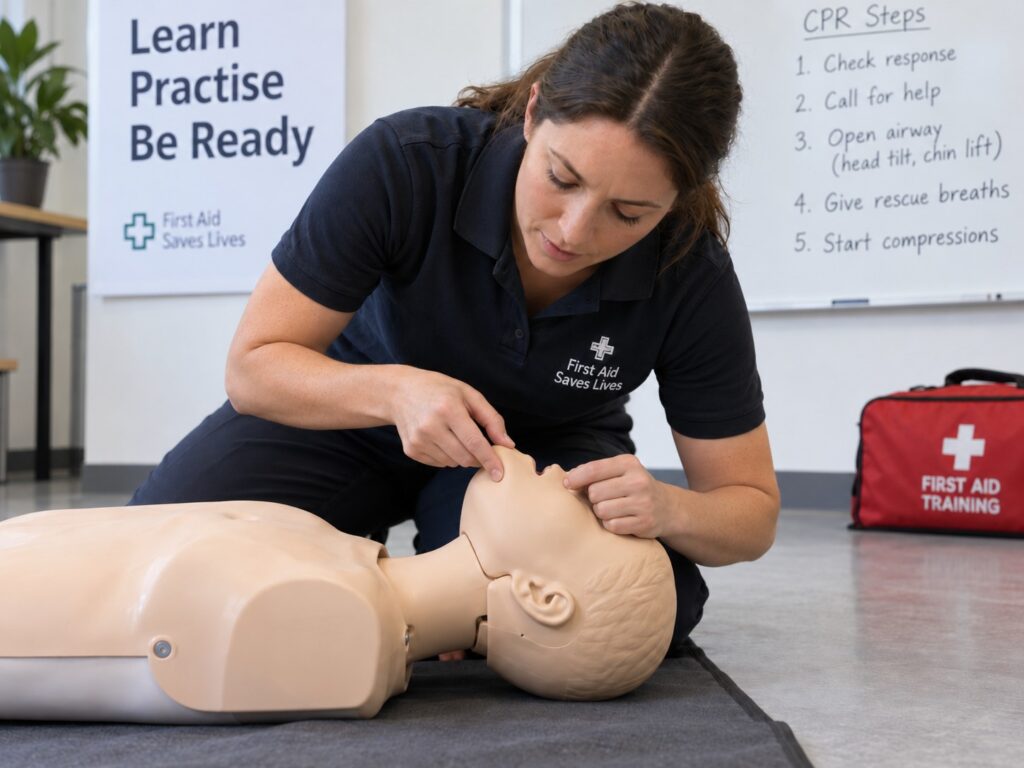
If you’ve been trained to give rescue breaths and feel able to, follow every 30 compressions with two rescue breaths. If you haven’t been trained to give rescue breaths, perform continuous chest compressions without interruption. Don’t let uncertainty about rescue breaths stop you from starting CPR.
To give a rescue breath:
- Tilt the head back and lift the chin, then pinch the soft part of the nose closed.
- Take a breath, seal your mouth around theirs, and blow steadily for about one second until you see the chest rise.
- Lift your mouth away and watch the chest fall before repeating once more.
Keep each attempt brief. If a breath doesn’t go in after a couple of tries, return to compressions rather than losing time.
- If a Defibrillator arrives
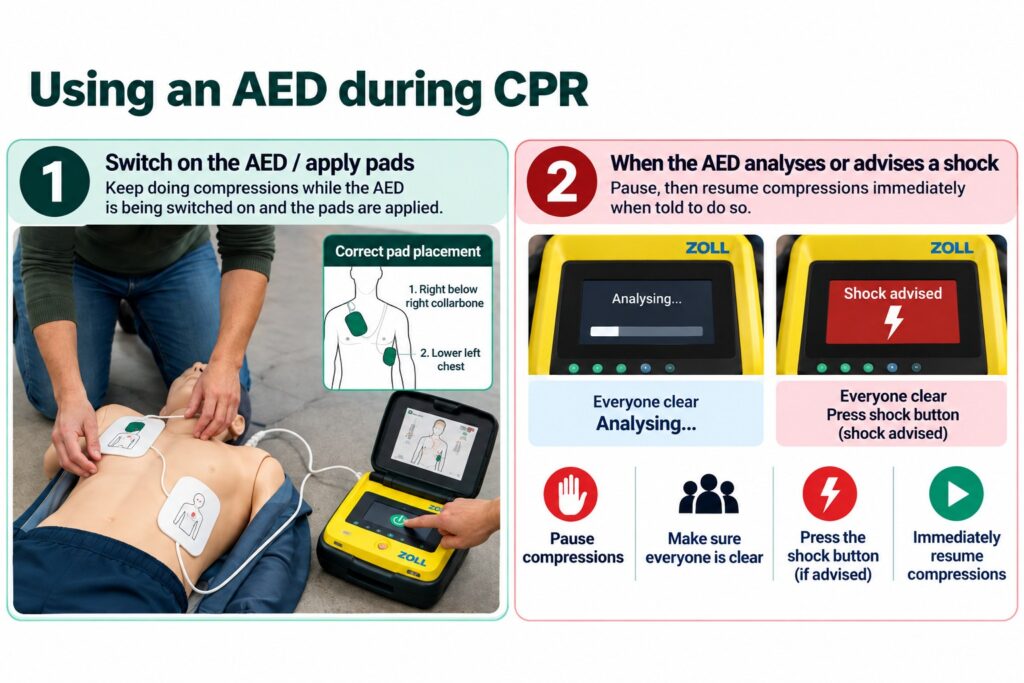
Continue CPR while the defibrillator is switched on and the pads are applied. Pause compressions only when the AED instructs you to – for example, while it analyses the heart rhythm or delivers a shock – then resume immediately when it tells you to.
- Keep going
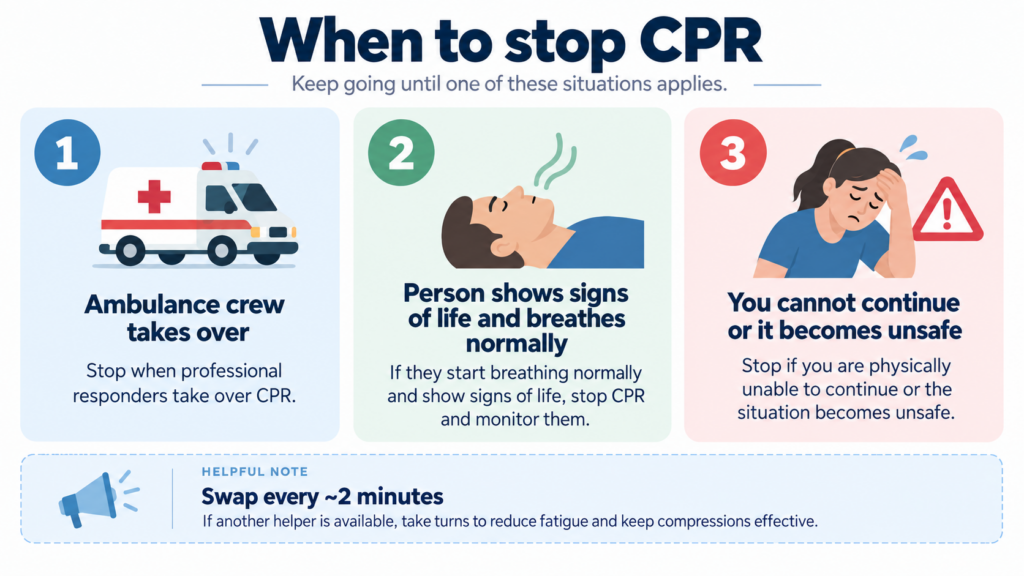
Continue cycles of 30 compressions to two breaths (or continuous compressions, if you’re not giving breaths) until one of the following happens:
- A healthcare professional or ambulance crew arrives and takes over.
- The person shows definite signs of life and starts breathing normally.
- You become physically unable to continue, or it becomes unsafe to carry on.
If another rescuer is available, swap the person doing compressions approximately every two minutes, keeping the changeover as quick as possible.
Why CPR training matters
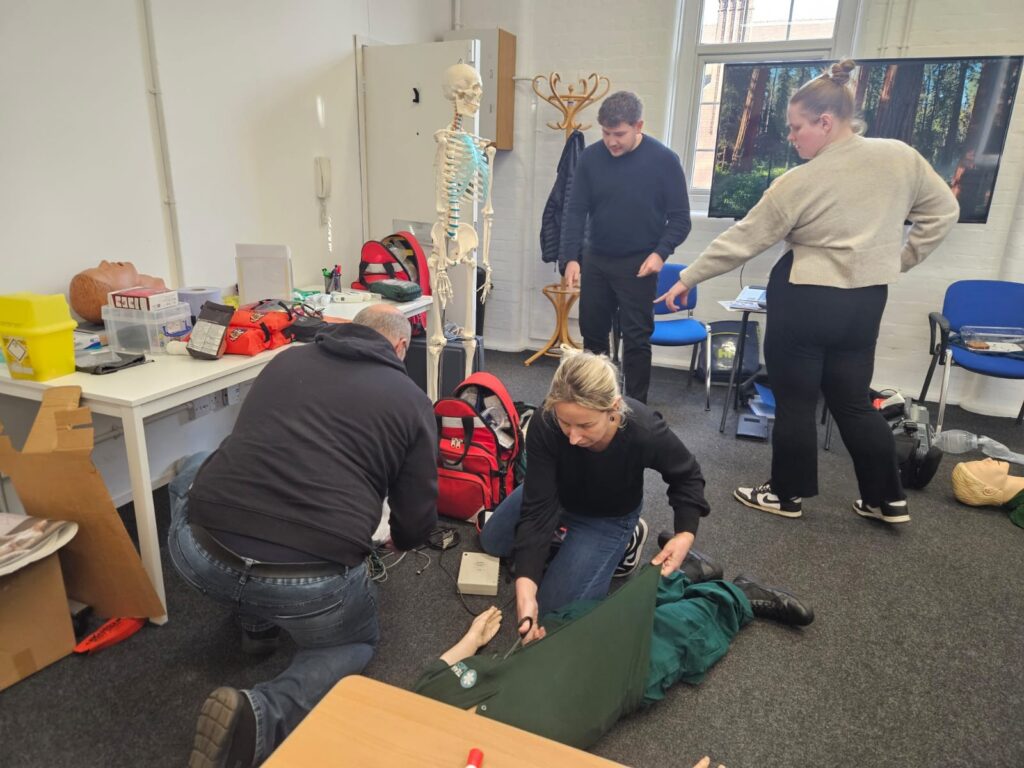
Reading about CPR is a good start, but nothing replaces the muscle memory and confidence that come from practising on a manikin under expert guidance. Team Medic delivers accredited first aid and CPR training for workplaces, gyms, schools, and community groups across Surrey and beyond, so your team can respond calmly when it counts.
If your team needs a formal qualification, our QA Level 2 Award in Basic Life Support and Safe Use of an AED covers exactly the skills in this guide, alongside our wider first aid training courses in Surrey. Many workplaces also opt for our Emergency First Aid at Work course, which covers managing an unresponsive casualty, CPR, and defibrillation as part of a broader first aid qualification.
We also provide qualified medical cover for events of every size, from local fun runs to major public gatherings, with clinicians ready to step in the moment they’re needed.
Outside an emergency, it’s also worth familiarising yourself with the location of nearby defibrillators using the British Heart Foundation’s DefibFinder. In an actual emergency, always call 999 first – the ambulance service can direct a helper to a registered defibrillator.
Frequently Asked Questions
Keep going until professional help takes over, the person shows definite signs of life and is breathing normally, or you’re physically unable to continue or it becomes unsafe to carry on.
Continuous chest compressions on their own still give someone a real chance of survival. Don’t hold back from starting CPR just because you can’t give breaths. You can find further guidance on hands-only CPR from the British Heart Foundation.
Push down to a depth of about 5–6cm at a steady rate of 100 to 120 compressions per minute, letting the chest rise fully between each push.
No. Start CPR immediately regardless of whether a defibrillator is nearby — a helper can fetch one while you continue compressions, and CPR should continue while it’s being switched on and applied.
Yes. This article covers adult CPR. CPR for babies and children uses modified compression techniques and rescue-breath guidance. Follow current Resuscitation Council UK paediatric guidance or instructions from the 999 call handler.
CPR can cause injuries such as bruising or occasionally rib fractures, but the risk of serious harm is low, and rescuers should not be afraid to act if cardiac arrest is suspected. Doing something is almost always better than doing nothing.
Ready to give your team the skills and confidence to respond in an emergency? Get in touch with Team Medic to book accredited first aid and CPR training, or call us on 01483 740237 or email info@team-medic.com