The man on the treadmill goes quiet. His face pales. His knees buckle, and within seconds he’s on the floor. Every second that passes now decides whether he walks out of this gym or leaves in an ambulance. Without bespoke first aid training, does anyone in the room actually know what to do next?
That scenario plays out in gyms more often than most people realise. However, generic first aid training rarely prepares staff for it. Standard courses teach the basics well. However, they don’t address the specific hazards found in high-intensity fitness spaces, contact sports, or busy offices. Consequently, many workplaces end up with certificates on the wall and gaps in genuine readiness.
This is exactly why sector-specific training matters. A one-size-fits-all course covers the fundamentals. However, it rarely accounts for cardiac risk during exercise, contact injuries on a pitch, or the slower crises that build at a desk. Therefore, tailoring the approach to the real environment is what closes the gap between “certified” and “prepared.”
Why generic first aid courses fall short and where bespoke training wins.
Most standard courses are built around everyday domestic or general office scenarios. They teach CPR, bandaging, and basic emergency response. One of the fundamental emergency-response skills is knowing how to carry out a primary survey in first aid, so immediate threats to life are identified in a consistent order.
In addition, generic courses often skip equipment relevant to specific sectors. A defibrillator mounted near the cardio machines needs different handling than a pitch-side spinal board. As a result, staff can hold a valid certificate. Yet they may still hesitate when a real emergency unfolds in their own setting.
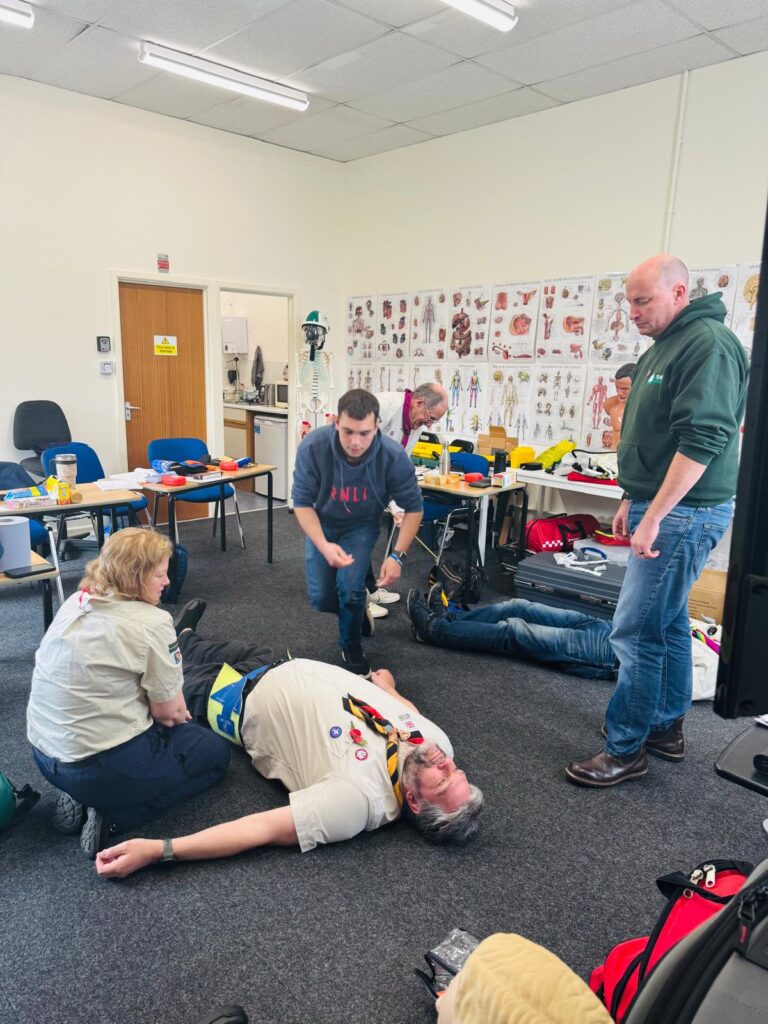
Bespoke first aid training solves this problem directly. It rehearses the exact scenarios employees are statistically likely to encounter, in the actual space where they work. That distinction, in practice, is what separates confidence from hesitation.
Gyms: high heart rates and hidden cardiac risk
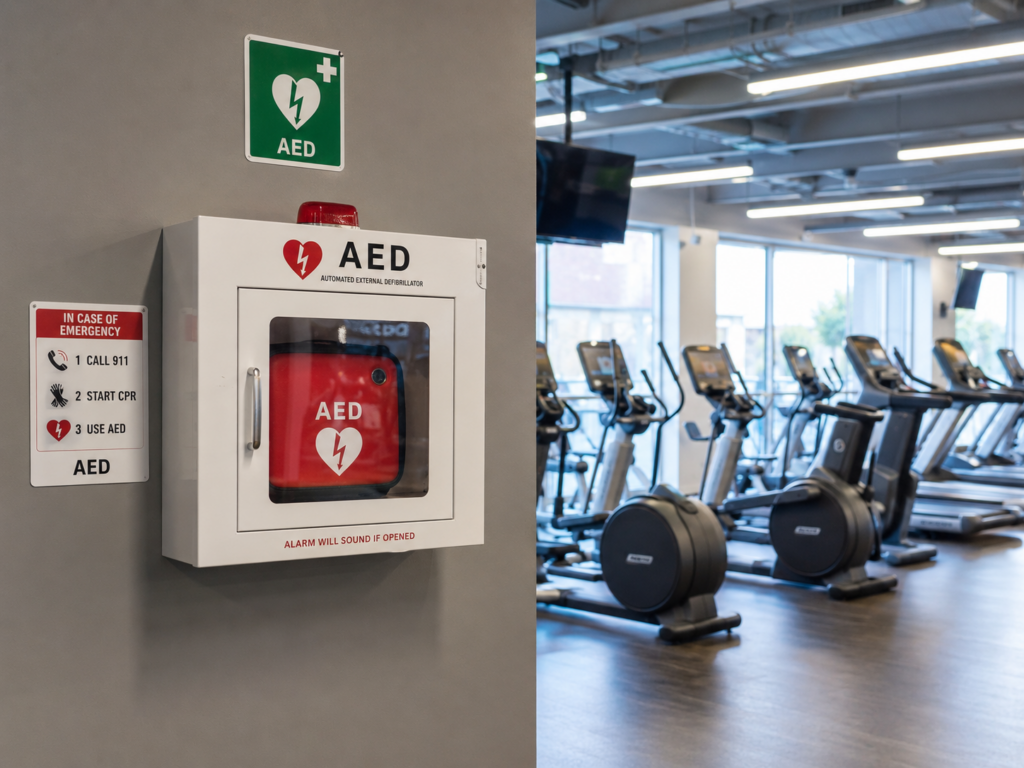
Gyms are unusual environments. Clients deliberately push their bodies into elevated heart rate zones. Consequently, the risk profile looks nothing like an office or a warehouse floor. Sudden cardiac arrest, exercise-induced asthma attacks, and heat-related collapse are all realistic possibilities during an ordinary session.
Tailored training for gym staff should therefore focus heavily on defibrillator use. Cardiac events can escalate within minutes. Therefore, staff need real confidence locating and operating the AED, not just theory from a slide deck. Furthermore, training should cover early warning signs: sudden weakness, chest discomfort, or a client stopping mid-set without explanation.
Rhabdomyolysis, dehydration, and heavy-lifting injuries are also worth covering. In addition, staff should practise clearing equipment quickly to create space for CPR. Gym floors are often crowded, and cluttered space slows everything down. Practical rehearsal like this turns theory into muscle memory that instructors can rely on under pressure.
Sports clubs: trauma, fractures, and fast decisions
Sports clubs face an entirely different set of hazards. Fractures, dislocations, and concussions are common on a pitch or court. This is particularly true in contact sports such as rugby, football, and hockey. Therefore, training for coaches and volunteers must go beyond the basics. It needs structured protocols for head injuries and suspected spinal trauma.
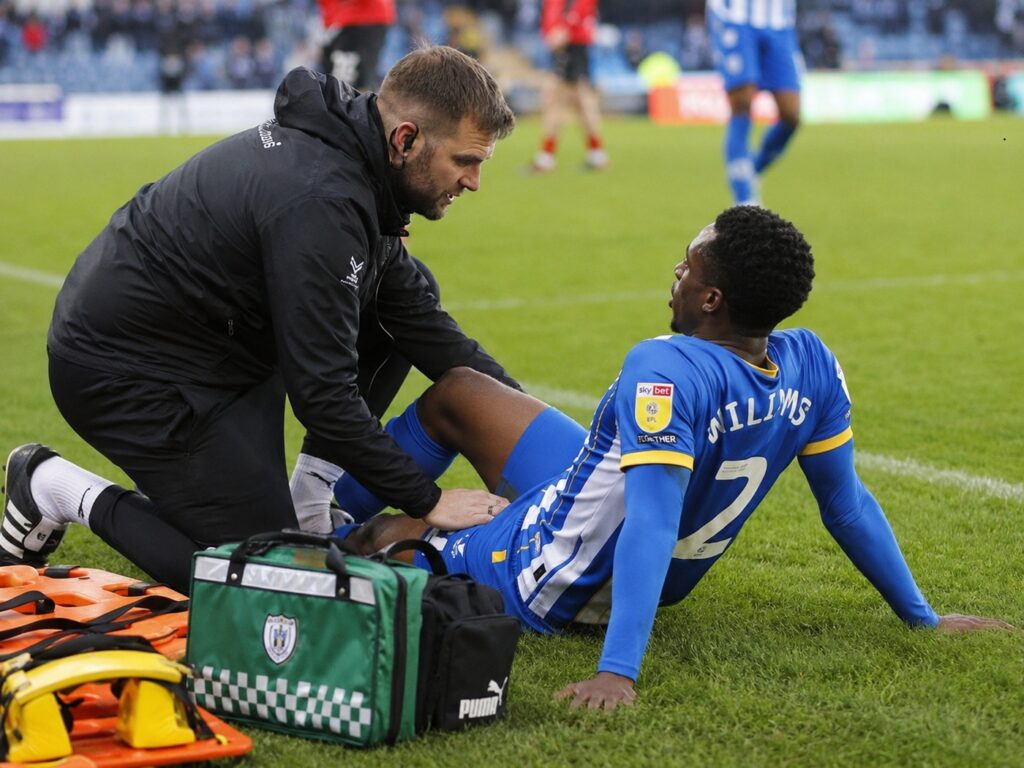
Recognising concussion symptoms matters enormously here. Players often want to keep playing despite clear warning signs. So, coaches need clear, memorable guidance for making the call to remove someone from the field. In addition, training should cover splinting, managing suspected fractures safely, and coordinating with paramedics when an ambulance is needed pitch-side.
Weather-related risks deserve attention too, from heat exhaustion in summer fixtures to hypothermia in winter training. However, the priority for most clubs remains rapid, confident trauma response. Delays in stabilising a serious injury can worsen outcomes considerably. Sector-specific training gives volunteers the exact skills their sport demands, rather than a generic checklist.
Workplaces: stationary risks and mental health integration
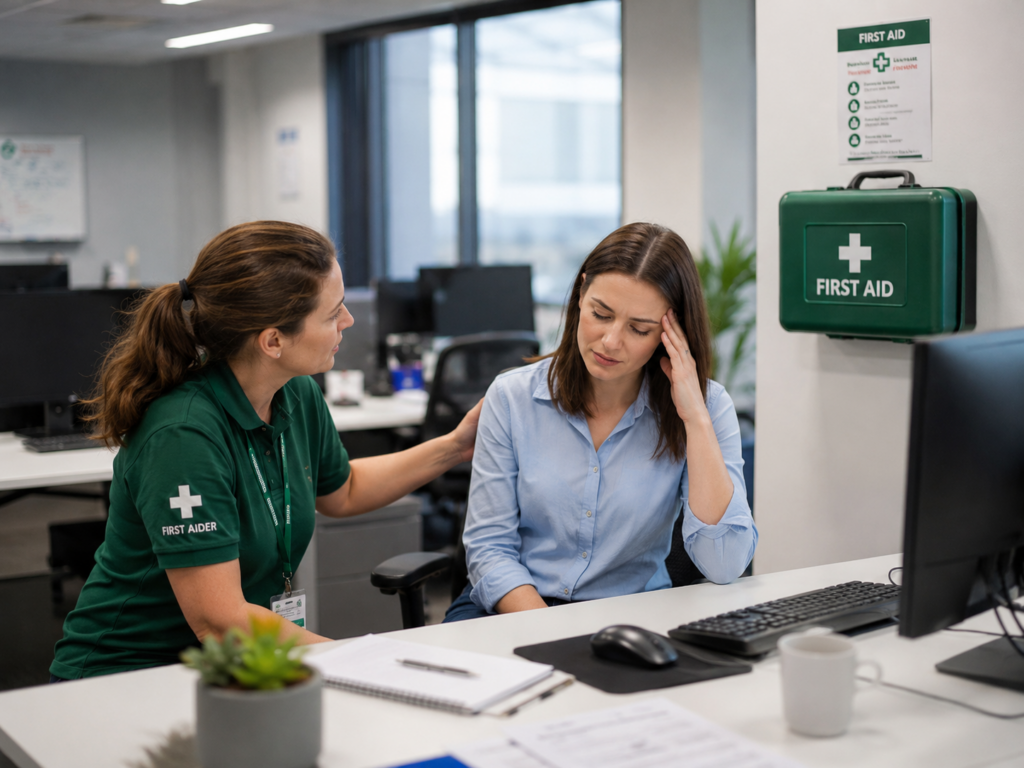
Office environments present a quieter, slower-building set of risks. Falls, cuts, and minor injuries still happen. However, cardiac events, strokes, and mental health crises are often the more serious concerns in this setting. Consequently, workplace training increasingly integrates mental health first aid alongside physical response skills.
Employers also carry legal compliance obligations under health and safety regulations. Therefore, training must map clearly to a workplace’s specific risk assessment. This spans manual handling injuries in a warehouse through to prolonged sitting-related health issues in an office. Furthermore, staff should learn to recognise the early signs of a stroke or a panic attack. Both are frequently missed in busy environments.
A bespoke programme also considers building layout, shift patterns, and the realistic number of trained first aiders needed per floor. In addition, refresher sessions should reflect actual incidents logged on-site. That is far more useful than a generic annual box-tick exercise. This approach keeps the training relevant, not just compliant on paper.
What bespoke first aid training actually includes
A strong sector-specific programme usually combines several elements, tailored to the environment it serves:
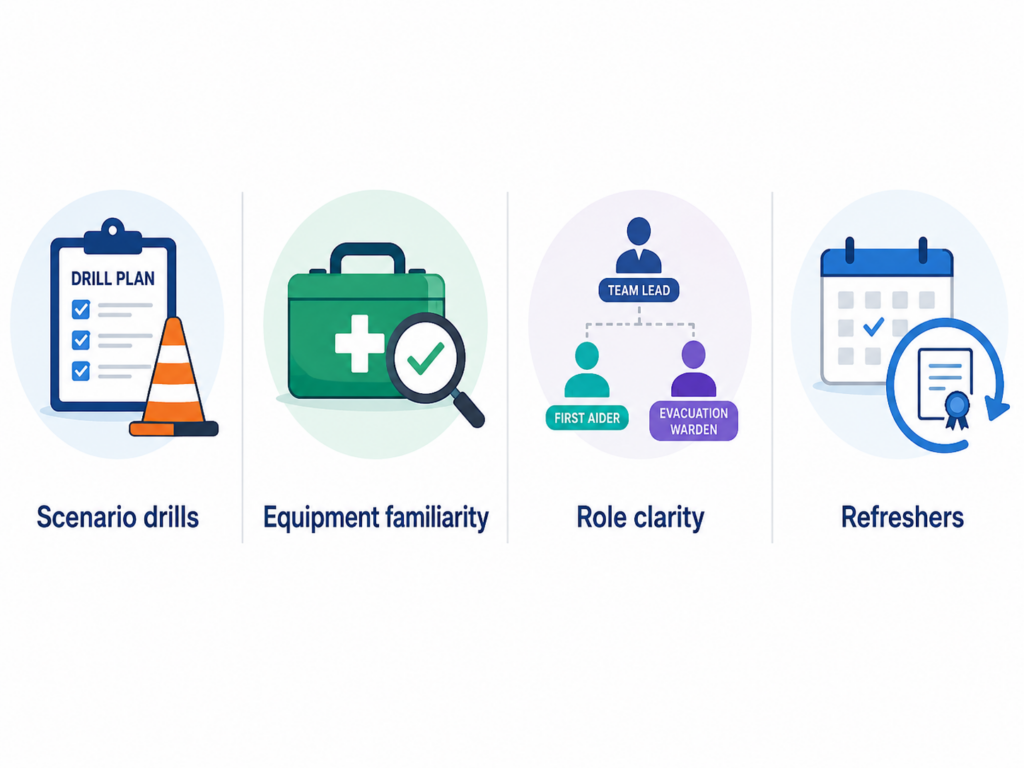
- Scenario-based drills that mirror real incidents likely to occur on-site, rather than abstract textbook examples.
- Equipment familiarity, including hands-on practice with the exact defibrillators, first aid kits, or trauma equipment already installed in that location.
- Role clarity, so staff know precisely who leads, who calls for help, and who manages bystanders during an emergency.
- Regular refreshers, timed around genuine incident data rather than a fixed annual date.
In addition, a good provider will walk the site beforehand. This helps them understand layout, foot traffic, and existing equipment before designing the course content. As a result, the training reflects the building, the team, and the risks that actually exist there.
Training built around real risk
Generic first aid training gives people a foundation. However, it doesn’t prepare them for the specific emergencies they’re statistically most likely to face. Gyms need cardiac-focused readiness. Sports clubs need rapid trauma response. Workplaces need a blend of physical and mental health skills mapped to compliance requirements.
Bespoke training closes that gap. It replaces theoretical confidence with practical, rehearsed skill. It also ensures staff know exactly what to do when the moment actually arrives. Therefore, the real question isn’t whether your team holds a certificate. It’s whether they’re genuinely ready for your environment, specifically.
Bespoke training closes that gap. It replaces theoretical confidence with practical, rehearsed skill. It also ensures staff know exactly what to do when the moment actually arrives. Therefore, the real question isn’t whether your team holds a certificate. It’s whether they’re genuinely ready for your environment, specifically.
Book bespoke first aid training with Team Medic. Our CQC-registered team designs sector-specific courses for gyms, sports clubs, and workplaces. Contact us at team-medic.com/contact-team-medic/ or call 01483 740237 to discuss a programme built around your actual risks.