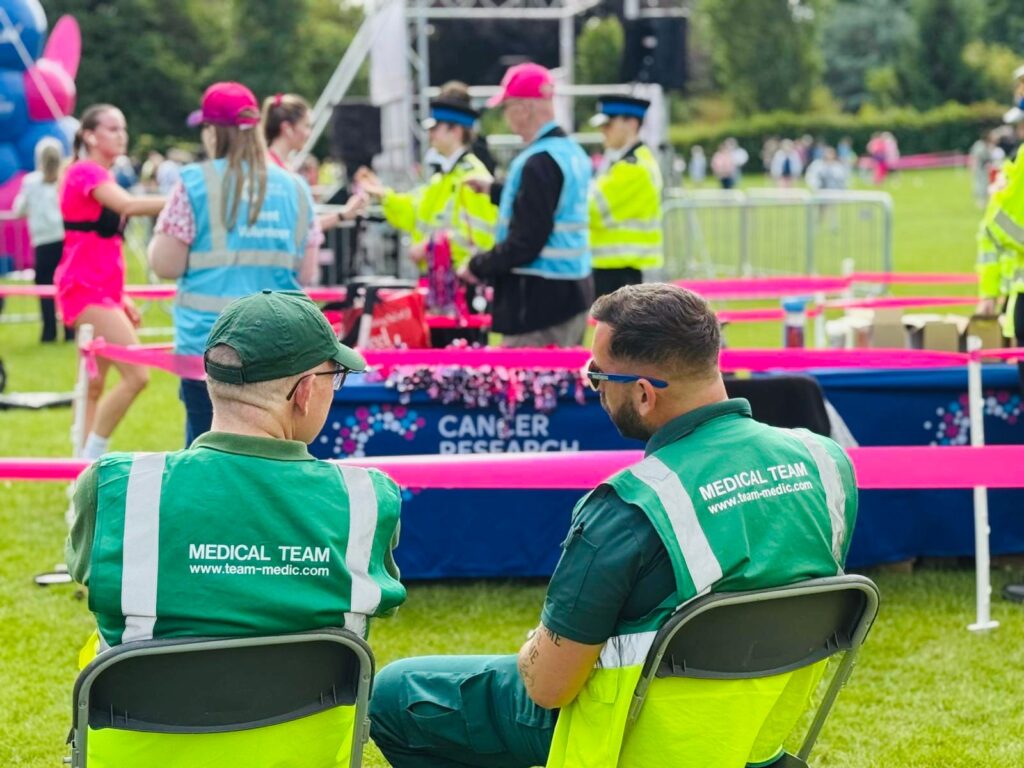
Summer is here and with it comes a packed calendar of festivals, outdoor parties, charity runs, corporate away days, and community fairs. Whether you are organising a 200-person garden party or a multi-stage music festival drawing thousands of visitors, one question should sit near the top of your planning checklist: do you have the right event medical cover in place?
Getting this right is not simply about ticking a compliance box. It is about protecting your attendees, safeguarding your organisation, and ensuring that if something goes wrong, trained professionals are on hand to respond quickly, calmly, and effectively. At Team Medic, we have supported events of every size across the UK and in this guide, we walk you through everything you need to know.
Why event medical cover matters more than you might think
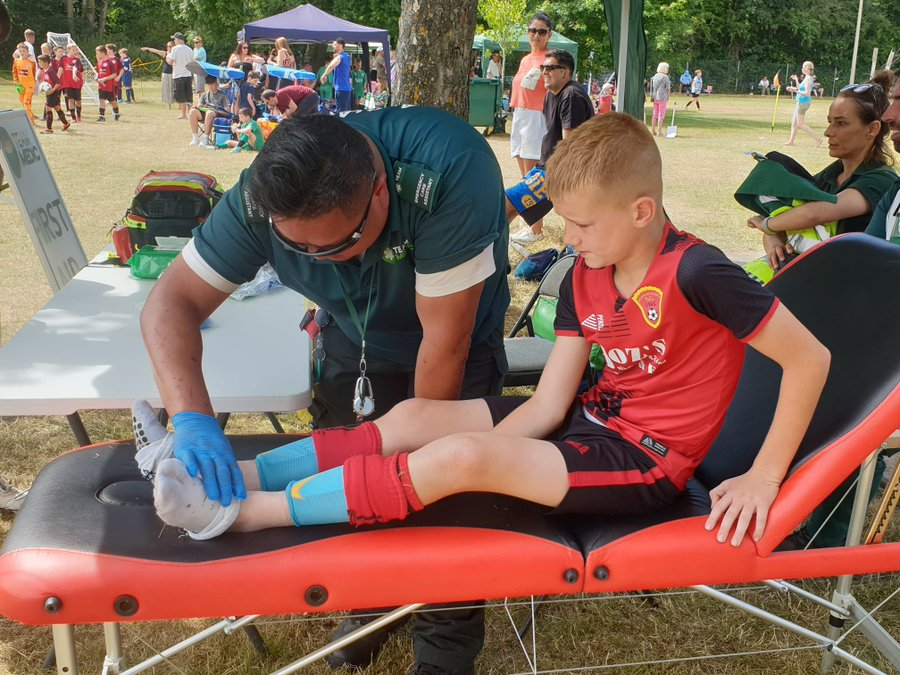
It is easy to underestimate medical risk at events, particularly at smaller or lower-key gatherings. However, the reality is that incidents can and do happen at every type of event. Heat-related illness, allergic reactions, cardiac events, slips and falls, alcohol-related emergencies, and crowd injuries are all part of the event landscape.
Summer events also create practical planning challenges. High temperatures, dehydration, increased alcohol consumption, long queues, exposed sites, poor shade and delayed access routes can all affect casualty numbers and response times. Medical cover should therefore be planned alongside welfare points, water stations, shaded areas, crowd flow and emergency vehicle access.
When an incident occurs, the speed and quality of the medical response can be the difference between a full recovery and a life-altering outcome. Furthermore, having no cover, or inadequate event medical cover, exposes your attendees to unnecessary risk and exposes you, as the organiser, to serious legal and reputational consequences.
A well-staffed medical provision operating professionally in the background means everyone can focus on enjoying the event. To understand what that looks like in practice, take a look at our guide to comprehensive event first aid cover.
Understanding your responsibilities as an event organiser
Before comparing medical providers, it helps to understand what your responsibilities actually are. As an event organiser, you have a duty of care to everyone on site – attendees, staff, volunteers, and contractors. This is a legal obligation under health and safety legislation, requiring you to take reasonable steps to prevent harm and ensure appropriate emergency response is available.
For larger or higher-risk events, this duty of care extends to demonstrating that your medical provision has been properly risk-assessed and planned. Local authorities, licensing bodies, and venue operators may request evidence of your medical plan as part of the licensing or permissions process.
The Purple Guide – the UK’s authoritative resource for health, safety, and welfare at events – provides a widely-used framework for understanding appropriate levels of medical cover based on event size, duration, audience profile, and risk factors. Aligning your planning with these guidelines is strongly recommended, even for events that fall outside formal licensing requirements.
Additionally, the Health and Safety Executive (HSE) publishes event safety guidance that all organisers should familiarise themselves with before planning begins.
Event risk assessment: the starting point for every medical plan
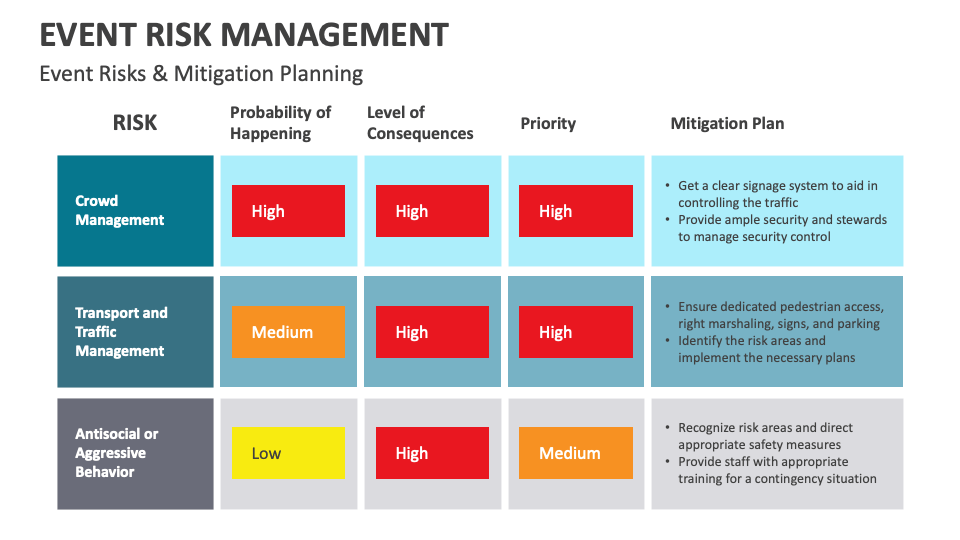
No two events are alike, and no medical plan should be copied from one event to another. A thorough event risk assessment is therefore the essential starting point – a structured process that examines the specific risks associated with your event. Here are the key factors your medical provider should assess:
Audience profile
A children’s sports day carries very different medical risks to a beer festival. The age range, fitness levels, and likely behaviour of your audience all influence the type and volume of medical resource needed.
Event type and activity
High-energy activities such as fun runs, obstacle courses, or dance events carry higher risk profiles than seated corporate dinners. Our sports team medical services page outlines how we approach cover for physically demanding events specifically.
Duration and timing
All-day or multi-day events require sustained staffing and fatigue management for your medical team. Evening events may also see different risk profiles compared to daytime gatherings.
Weather and environment
Summer events are particularly susceptible to heat-related illness, including heat exhaustion and heatstroke. Our festival safety tips for 2025 cover how to manage heat risk at outdoor events in detail.
Crowd size and density
Larger crowds increase both the statistical likelihood of incidents and the complexity of reaching patients quickly. Medical teams must be positioned and vehicles routed to ensure rapid response across the entire site.
Access to NHS services
If your event is remote from a hospital or has road access limitations, your on-site medical cover may need to be more comprehensive to bridge the gap until ambulance services arrive. The NHS guidance on calling emergency services at events is a useful reference point for understanding handover protocols.
Event medical cover provider checklist
| Check | Why it matters |
| CQC registration where relevant | Supports regulatory assurance and due diligence |
| Qualified clinical staff | Ensures the right level of care for the event risk |
| Medical plan provided | Demonstrates planning, escalation and integration |
| Suitable equipment | Confirms readiness for predictable emergencies |
| Insurance in place | Protects the organiser and provider |
| Escalation procedure | Shows how serious incidents will be managed |
| Event experience | Ensures staff understand crowd, site and event pressures |
What good event medical staffing looks like
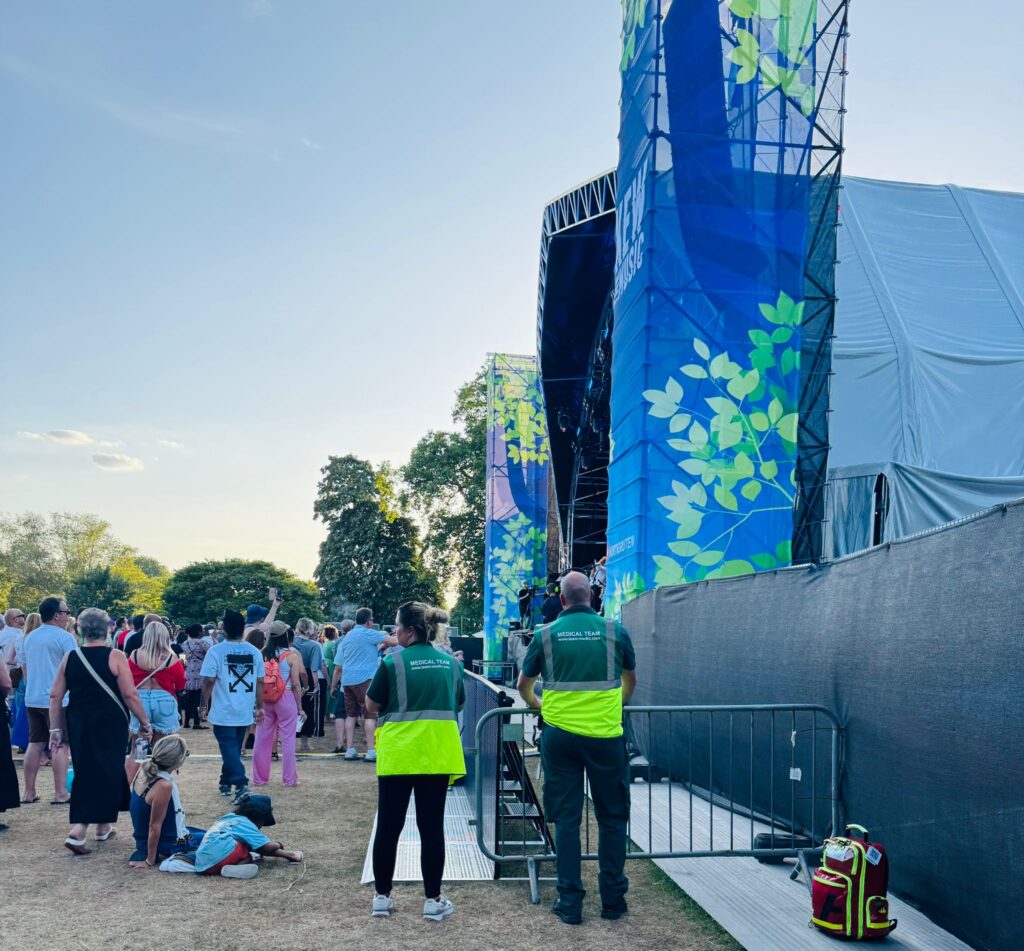
The staffing of your event medical cover matters enormously – not simply in terms of numbers, but in terms of having the right people, with the right skills, in the right positions. Event medical teams can include a range of professionals, from trained Medical First Responders and emergency medical technicians (EMTs) through to paramedics, nurses, and event doctors.
Our event first aid page provides a full overview of the staffing options available and the types of events each level of provision is suited to.
For smaller, lower-risk events, a team of trained first aiders may be entirely appropriate. However, as event size, duration, or risk profile increases, you may need paramedic-level cover, advanced life support capability, or a medical officer on site.
Equally important is how the team is deployed. A medical team that is too centralised may struggle to reach patients at the far end of a large site in time. Roving responders, clearly marked first aid points, and well-communicated access routes all contribute to effective response times. Moreover, every member of our team is experienced in event environments – not just clinical settings – because managing a patient effectively in a crowd, in the open air, and under time pressure requires a distinct skillset. One of those core skills is carrying out a structured primary survey to recognise and treat life-threatening problems quickly.
CQC considerations: why regulated providers matter
Whether CQC registration is required depends on the nature of the care being delivered. Where a provider is delivering regulated clinical activity, such as treatment of disease, disorder or injury, CQC registration may be required.
The CQC is the independent regulator of health and social care in England. Choosing a CQC-registered provider gives organisers stronger assurance around governance, clinical oversight, quality standards and accountability, particularly where the provider is delivering care beyond basic first aid.
This also matters for your own due diligence. If a licensing authority, insurer, venue operator or Safety Advisory Group asks you to demonstrate the quality of your medical provision, a regulated provider offers clear, verifiable evidence.
Team Medic holds a range of accreditations, including CQC registration, HCPC-registered clinicians, and Cyber Essentials certification. You can view all of our accreditations in full on our website.
Questions to ask before you book your event medical cover
When evaluating providers, a confident, professional team will welcome scrutiny. Here are the key questions to ask:
- Clinical credentials – What qualifications do your staff hold, and are clinical leads registered with professional bodies such as the HCPC or NMC?
- Event experience – Has your team worked at events of a similar size and type? Event medicine is a distinct discipline requiring experience beyond clinical settings.
- Equipment – Will defibrillators, oxygen, medication, and appropriate vehicles be on site?
- Communication and command – How does your medical team integrate with wider event safety operations?
- Contingency planning – What happens if an incident escalates? How do you interface with NHS ambulance services?
- Insurance and liability – Is your organisation appropriately insured for event medical services?
If you are also responsible for training your own staff or volunteers in first aid, our pre-hospital training courses are designed specifically for event and emergency environments.
Don’t leave event medical cover until the last minute
One of the most common mistakes event organisers make is treating medical cover as a late-stage booking. In reality, it should be part of your planning from the very beginning. Leaving it to the final weeks limits your options, reduces the opportunity for proper planning and site visits, and can mean working with a provider who has not had adequate time to understand your event’s specific needs.
The best outcomes come from engaging your medical provider early – ideally at the same time as you are finalising your site layout, staffing plans, and risk assessments. To begin that conversation with Team Medic, simply complete our event first aid enquiry form and we will be in touch promptly.
Ready to discuss event medical cover for your summer event?
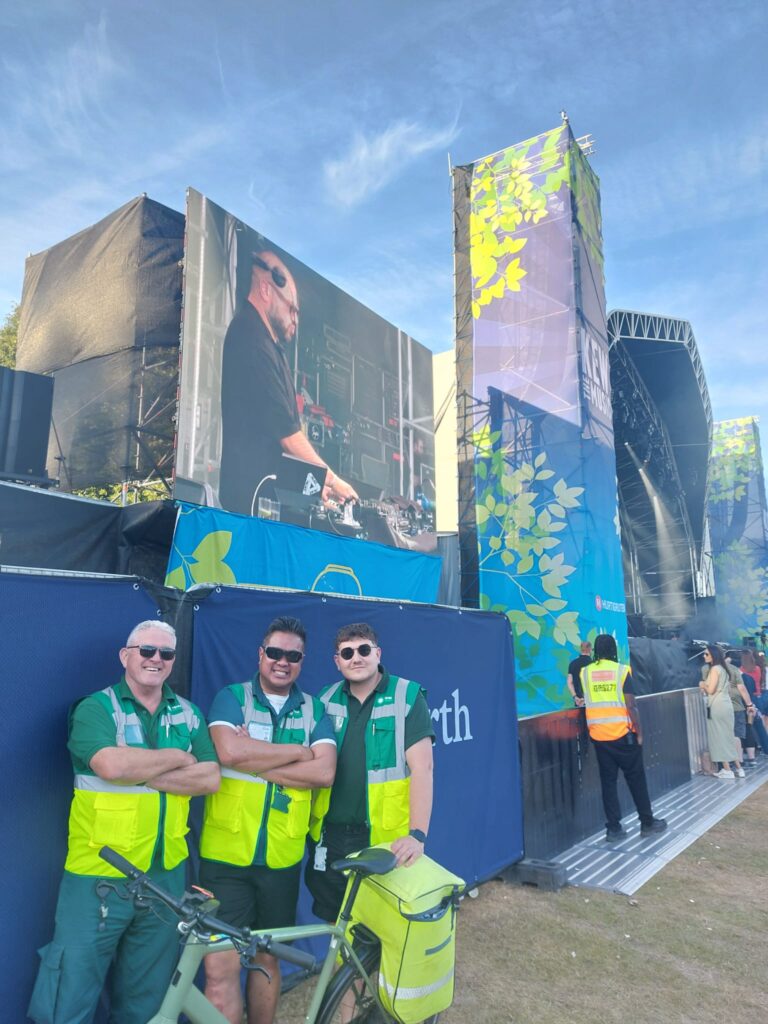
Choosing the right event medical cover means thinking carefully about your audience, your risk profile, your legal responsibilities, and the quality and credentials of the provider you choose. It means asking questions, expecting detailed answers, and working with a team that takes your event as seriously as you do.
At Team Medic, we provide professional, experienced, and fully equipped event medical cover for events of all sizes across the UK. Our teams are trained, regulated, and ready – so you can focus on delivering an event to remember, with the confidence that your attendees are in safe hands.
Contact Team Medic today to discuss your summer event medical requirements – or go straight to our event first aid enquiry form to get the conversation started.
Team Medic is a CQC-registered provider of event medical cover, event first aid, and pre-hospital training services across the UK. View our accreditations.
Frequently asked questions
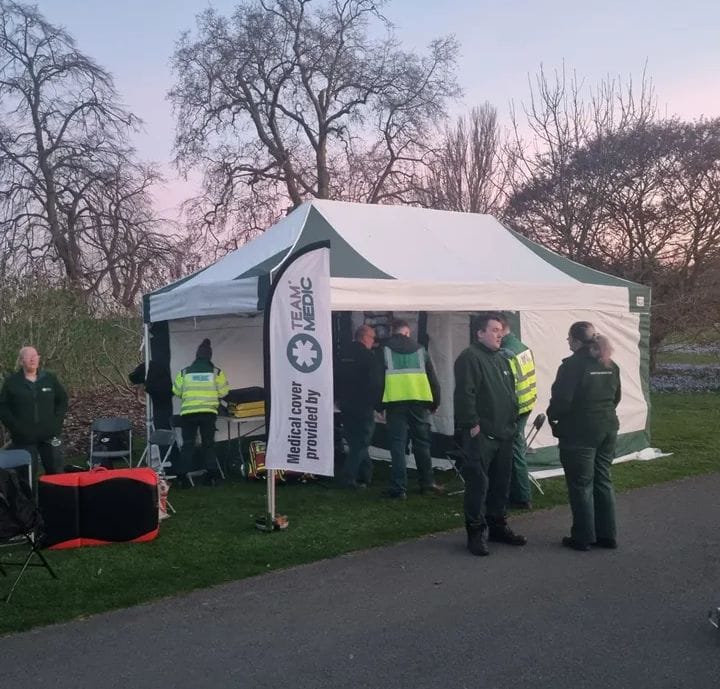
Event medical cover refers to the provision of trained medical personnel, equipment, and clinical infrastructure at an event to prevent, identify, and respond to medical emergencies. This can range from first aiders at small gatherings to paramedic-led teams with ambulances at large-scale events.
There is no single legal minimum – the appropriate level of event medical cover depends on your event’s risk assessment, including crowd size, event type, duration, and location. The Purple Guide and HSE event safety guidance provide a widely-used framework. Local authority licensing conditions may also specify requirements.
Whether CQC registration is required depends on the nature of the medical services being provided. However, choosing a CQC-registered provider such as Team Medic gives you independent assurance of quality and safety standards, and may be required or preferred by licensing authorities, venues, or insurers.
First aiders are trained to provide initial emergency care and manage casualties until further medical help arrives. Paramedics are registered healthcare professionals with advanced clinical training, able to administer medications, perform advanced airway management, and make clinical decisions. Higher-risk or larger events typically require paramedic-level event medical cover.
We recommend booking your event medical cover as early as possible in your planning process – ideally six to twelve weeks before the event. This allows time for a full risk assessment, site visit if required, and integration with your wider event safety plan.
Yes. Team Medic provides event medical cover across a wide range of summer events, including festivals, sports events, corporate hospitality days, private parties, school events, and film and TV productions. Visit our about page to learn more about who we are and how we work.
The easiest way to get started is to complete our event first aid enquiry form or contact us directly. We will ask you about your event, assess your needs, and provide a tailored proposal.