The NHS is under more pressure than ever. Hospital beds are full, discharge lounges are backed up, and ambulances queue outside A&E because there’s nowhere to safely move patients on to. This isn’t just a headline statistic: it’s a daily reality for hospital discharge teams, care home managers, and families trying to get a loved one home safely.
Private ambulance services are becoming a vital part of the solution. Not as a replacement for the NHS, but as a trusted extension of it: helping move patients safely, quickly, and compassionately, exactly when the system needs it most.
This article explains how Non-Emergency Patient Transport Services (NEPTS) like Team Medic support NHS patient flow, why timely transport matters more than ever, and what to look for in a CQC-registered provider you can trust.
Why hospital capacity challenges make patient transport critical
Every hospital bed that stays occupied longer than necessary has a knock-on effect. It delays new admissions, backs up A&E, and puts pressure on already-stretched clinical staff.
This is often called “bed blocking“: when a patient is medically fit for discharge but can’t leave because the transport, care package, or receiving facility isn’t ready. It’s rarely anyone’s fault. It’s usually a logistics gap.
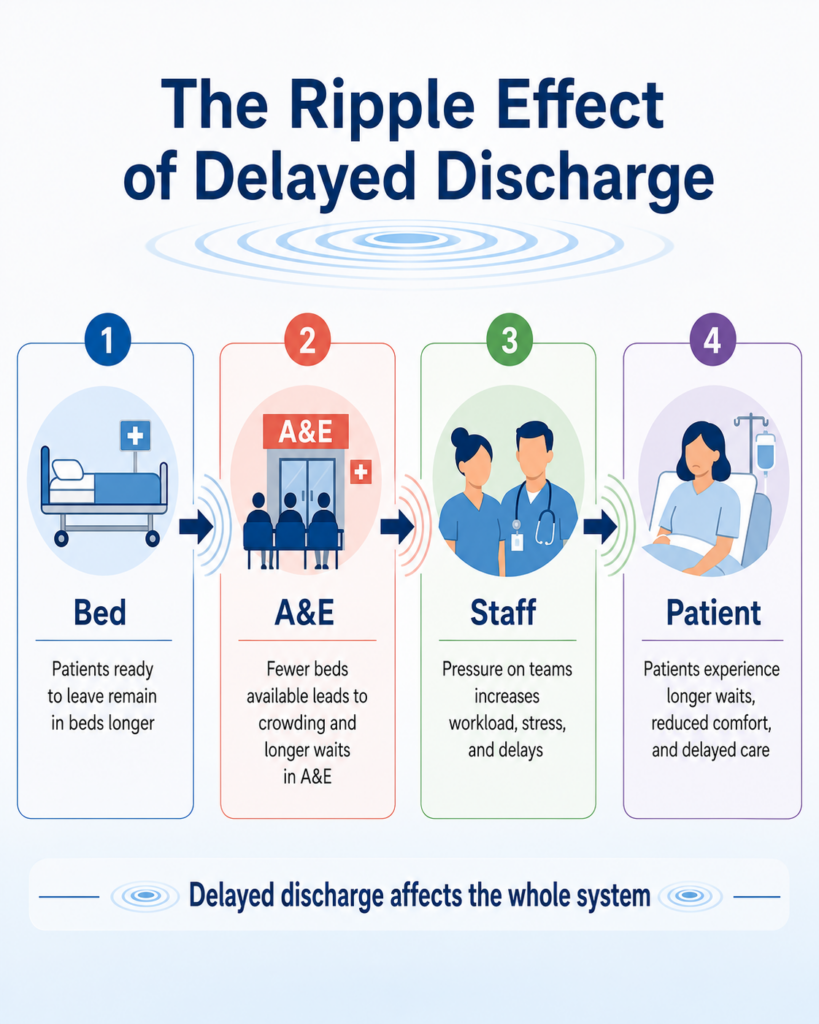
The ripple effect of delayed discharge
- A&E congestion: Ambulances can’t offload new patients if wards are full.
- Staff strain: Nurses and discharge coordinators spend valuable time chasing transport instead of caring for patients.
- Patient wellbeing: Longer hospital stays increase the risk of infection, loss of mobility, and confusion, especially in elderly patients.
- Financial cost: Every delayed discharge costs the NHS money that could be spent on frontline care.
Fast, reliable transport isn’t a “nice to have.” It’s one of the simplest, most effective ways to keep the whole system moving.
What is NEPTS and why does it matter?
Non-Emergency Patient Transport Services (NEPTS) move patients who don’t need blue-light emergency care but do need trained support, medical equipment, or mobility assistance to travel safely.

This includes:
- Hospital discharges, especially for elderly or frail patients
- Transfers between hospitals or care facilities
- Care home to hospital appointments and back again
- Patients with mobility needs, including wheelchair or stretcher transport
Unlike a standard taxi or family car, NEPTS is delivered by trained medical professionals in vehicles equipped for patient safety and comfort. That distinction matters, particularly for patients who are frail, confused, or medically vulnerable.
How Team Medic supports the NHS, not competes with it
Private ambulance providers are sometimes misunderstood as working against the NHS. In practice, the opposite is true. Team Medic exists to relieve pressure on NHS resources, not draw from them.
A CQC-Registered, trusted partner
Team Medic is a CQC-registered private ambulance and patient transport provider. That means:
- We meet the same rigorous safety and quality standards the NHS holds itself to.
- Every journey is delivered by trained medical staff, not general drivers.
- Our vehicles are equipped and maintained to clinical transport standards.
For hospital discharge teams and ICB commissioners, this registration isn’t a formality: it’s assurance that patient safety is never compromised for speed.
Freeing up NHS ambulance capacity
Every non-emergency transfer handled by Team Medic is one less call on NHS ambulance resources. That means:
- 999 ambulances stay available for genuine emergencies.
- Hospital discharge teams get a reliable, on-demand transport partner, reducing bottlenecks.
- Care homes and families gain a dependable option for appointments and transfers, without waiting on NHS transport queues.
This is the core of how private ambulance services support NHS patient flow: by absorbing the transport tasks that don’t need a 999 response, so the NHS can focus its resources where they’re needed most.
Safety and trust: what families and care teams can expect
We know that handing over a loved one’s transport, or discharging a patient into someone else’s care, requires trust. Here’s how Team Medic earns it.
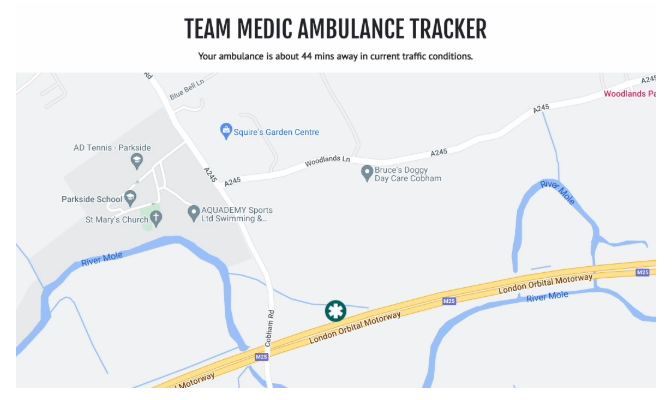
Real-time tracking for peace of mind
Every journey can be monitored with real-time ambulance tracking, so discharge coordinators, care homes, and families always know exactly where a patient is and when they’ll arrive.
Trained medical professionals, every journey
Our teams aren’t just drivers. They’re trained to:
- Recognise and respond to changes in a patient’s condition
- Handle mobility aids, oxygen, and other medical equipment safely
- Communicate clearly and compassionately with patients who may be anxious or confused
A compassionate approach
Patient transport isn’t just a logistics task. For many patients, it’s a stressful, emotional moment: leaving hospital after a long stay, or moving into unfamiliar care. Every Team Medic journey is delivered with dignity, patience, and reassurance, not just efficiency.
Who benefits from private ambulance support?
Hospital discharge teams
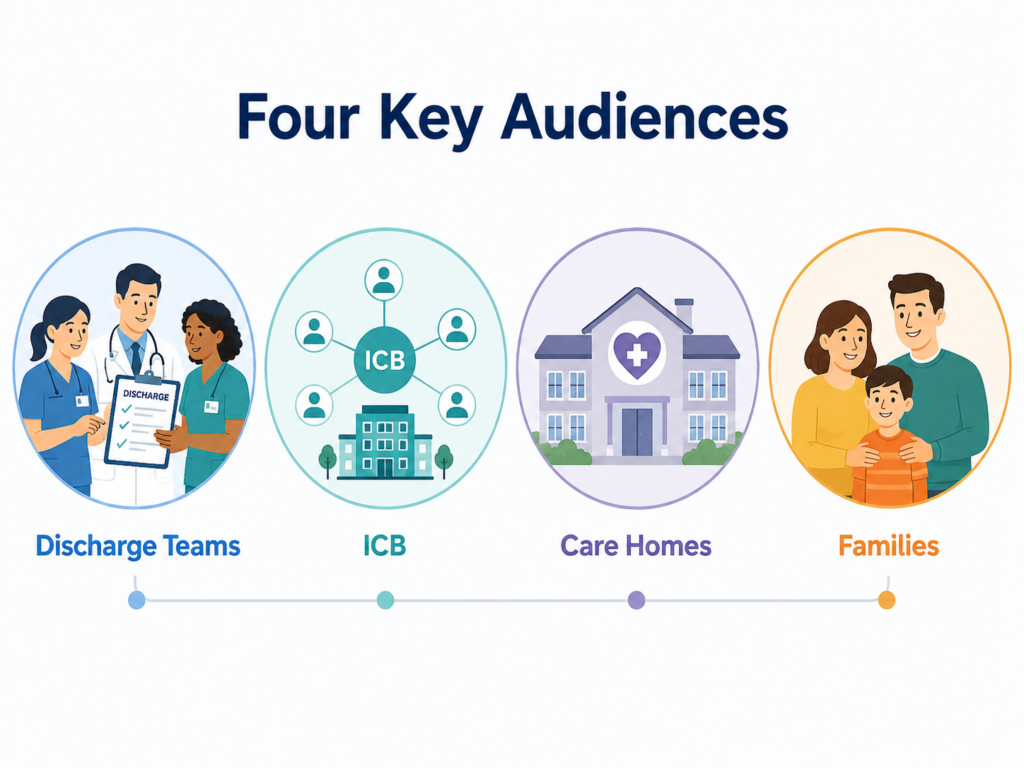
A reliable transport partner means fewer delays, fewer bed-days lost, and smoother handovers between hospital and home or care setting.
ICB Commissioners
Private NEPTS providers offer flexible, scalable capacity that can be commissioned to match seasonal demand, without the long-term overhead of expanding in-house fleets.
Care home managers
Consistent, trusted transport for hospital appointments and admissions means fewer disruptions to care schedules and better continuity for residents.
Families
Knowing a loved one is being moved by trained, CQC-registered professionals, with real-time tracking, brings peace of mind at a difficult time.
The bigger picture: Easing the NHS patient flow crisis
Hospital capacity challenges won’t disappear overnight. But timely, safe, professional patient transport is one of the most immediate and effective levers available to reduce bed blocking and keep patients moving through the system safely.
Private ambulance services like Team Medic aren’t stepping in to replace the NHS. We’re stepping in to support it: absorbing non-emergency transport demand, freeing up 999 resources, and giving hospital teams, commissioners, care homes, and families a partner they can rely on.
Contact Team Medic to discuss patient transport and discharge support
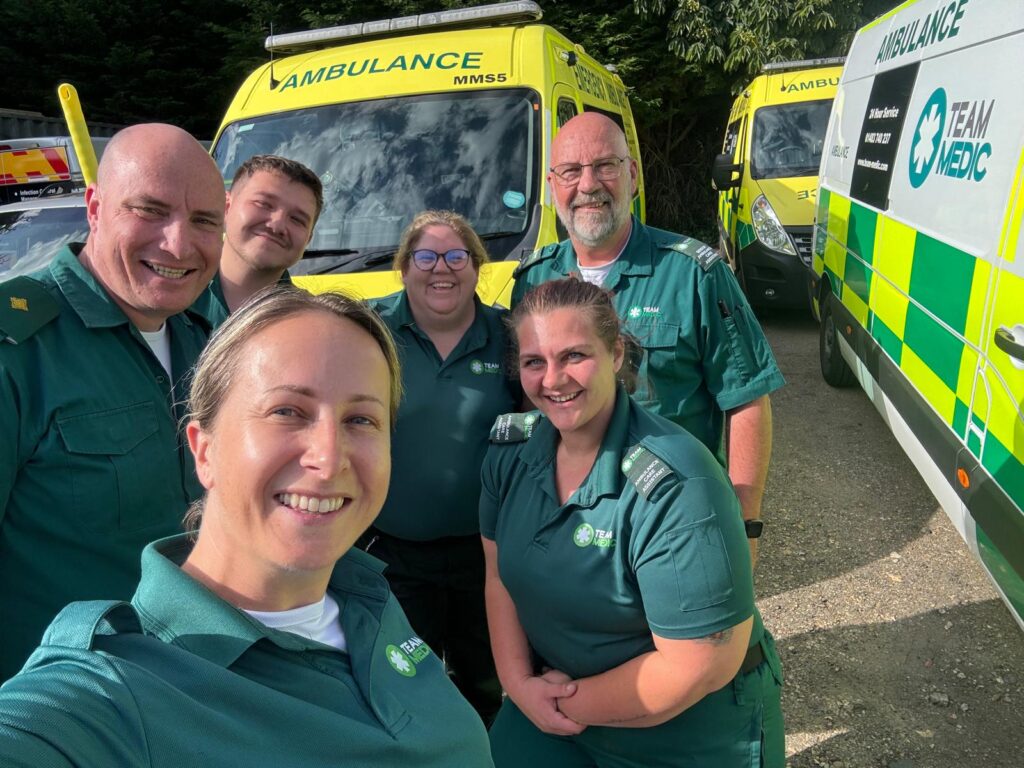
If you’re a discharge coordinator managing bed pressures, an ICB commissioner exploring flexible transport capacity, a care home manager planning resident transfers, or a family arranging safe transport for a loved one: we’re here to help.
Get in touch today:
📞 Call us: 01483 740237, 🌐 Visit: Team Medic Contact Page, 📧 Email: info@team-medic.com
Team Medic: a trusted, CQC-registered extension of NHS patient care.
FREQUENTLY ASKED QUESTIONS
Yes. Team Medic provides same-day non-emergency patient transport (NEPTS) for hospital discharges, including short-notice bookings when a bed needs to be freed quickly. Our CQC-registered crews coordinate directly with hospital discharge teams to arrange transport as soon as a patient is medically fit to leave, helping avoid the delays that contribute to bed blocking.
Team Medic provides trained medical escorts for hospital-to-hospital and hospital-to-care-home transfers, not just drivers. Every transfer is accompanied by staff trained to monitor a patient’s condition, manage mobility equipment, and respond appropriately if a patient’s needs change during the journey.
Team Medic’s fleet includes wheelchair-accessible vehicles designed for safe, comfortable non-emergency transport. This includes patients being discharged from hospital, attending appointments from a care home, or transferring between facilities who require step-free access and secured wheelchair transport.
Team Medic specialises in non-emergency transport for elderly and frail patients, a group that makes up a significant share of hospital discharge and care home transfer bookings. Our crews are trained to support patients who may be confused, anxious, or have limited mobility, with an approach built around patience and dignity rather than speed alone.
Team Medic provides stretcher transport for non-critical, non-emergency patients, including discharges, inter-hospital transfers, and care home admissions where a patient cannot safely travel seated. This falls under NEPTS (Non-Emergency Patient Transport Services) rather than 999 emergency response.
Team Medic is a CQC-registered private ambulance and patient transport provider offering Non-Emergency Patient Transport Services (NEPTS) for hospital discharges, transfers, and care home appointments. Contact Team Medic or call 01483 740237 to check coverage and availability for your area.
Yes. Private ambulance services like Team Medic handle non-emergency transport (NEPTS), such as hospital discharges and planned transfers, while 999 ambulances respond to medical emergencies. Using a private NEPTS provider for non-emergency journeys frees up NHS 999 ambulances for genuine emergencies, which is one of the direct ways private transport supports NHS patient flow.