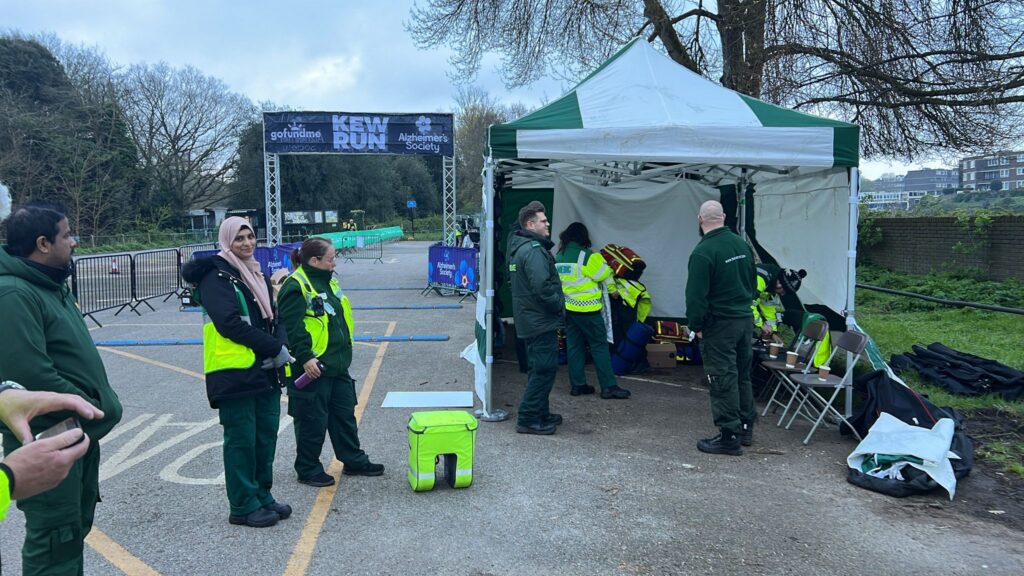
When planning for an event, an event medical plan is one of the most important jobs on any organiser’s checklist. Get it right, and your festival or outdoor event runs safely from start to finish. Get it wrong, and a small incident can escalate quickly, putting attendees, staff, and your licence at risk.
At Team Medic, we build and deliver event medical plans for festivals, sporting events, and outdoor gatherings of every size. This guide walks through exactly how we approach it, step by step, so you can plan your own event with confidence.
Why every festival needs a medical plan
A lot of organisers assume a couple of first aiders is enough cover. However, that’s rarely the case.
An event medical plan is a documented, structured strategy. It covers risk assessment, staffing levels, equipment, communication, and how your team escalates serious incidents. It is not the same as simply booking first aid cover.
Licensing authorities increasingly expect a formal medical plan as part of your event safety documentation. In many areas, this means referencing frameworks such as the Purple Guide. Without one, your event licence can be delayed or refused entirely.
In our experience, events with a proper medical plan see fewer serious incidents. They also recover faster when something does go wrong.
Step 1: start with a risk assessment
Every strong event medical plan begins with a risk assessment specific to your event. A generic template simply won’t cut it.
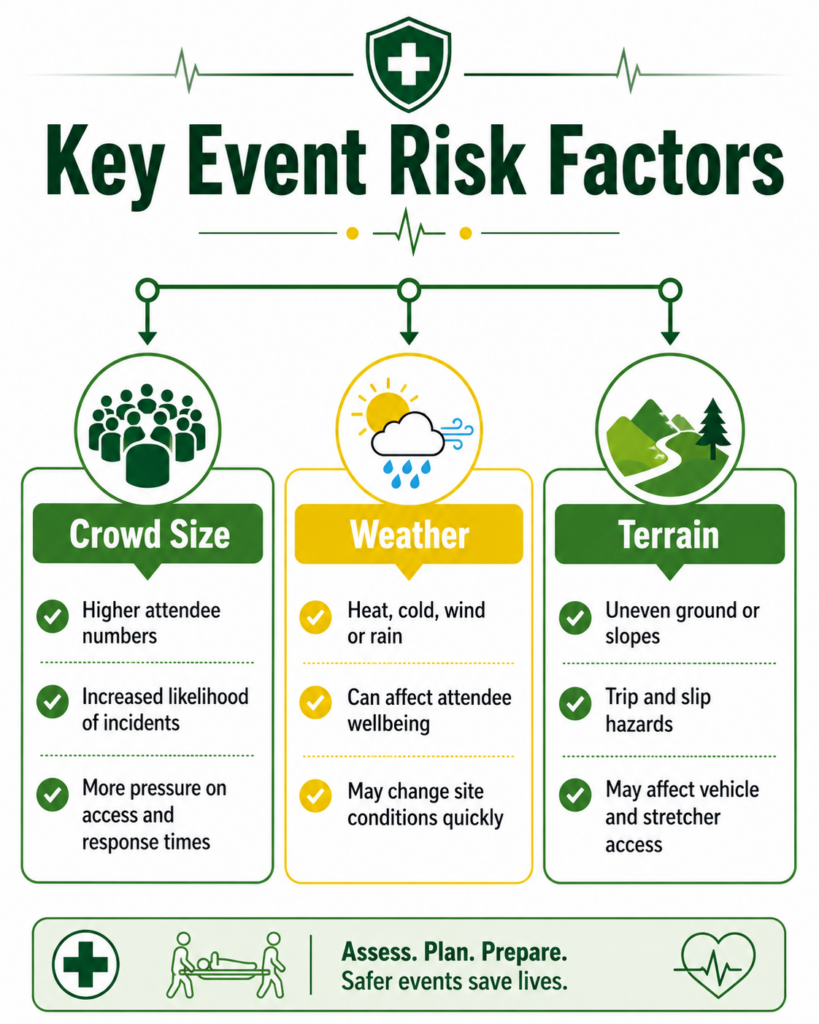
Consider the following factors:
- Crowd size and density – how many people, and how tightly packed will they be?
- Event type – a seated concert carries different risks to a mosh-pit festival or obstacle race
- Duration – multi-day events need different welfare provision than single-day events
- Demographics – family events need paediatric-aware cover; adult events may need a different clinical focus
- Location and terrain – rural fields and uneven ground slow down response times
- Weather exposure – heatwaves and cold snaps both drive predictable spikes in incidents
- Alcohol and substance use – this shapes both staffing levels and equipment needs
- Emergency vehicle access – can an ambulance actually reach your first aid point?
This assessment becomes the foundation for everything else in your plan. Get it wrong, and your staffing, equipment, and escalation plan will be wrong too.
Step 2: calculate the right medical staffing levels
There is no single ratio that works for every event. Anyone who quotes you a flat number without asking about your event first is guessing.
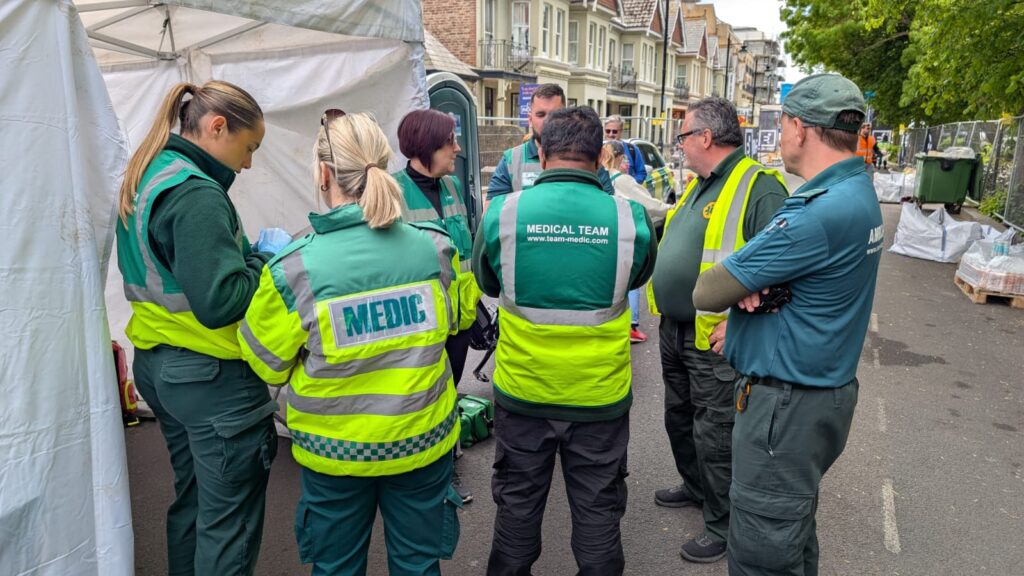
Instead, staffing decisions should factor in:
- Estimated attendance and peak crowd density
- The right mix of first aiders, paramedics, and clinical leads for your risk level
- Whether you need Basic Life Support (BLS) cover, or Advanced Life Support (ALS) with paramedics on-site
- Additional welfare or mental health first aid support for multi-day events
- Overnight cover for camping festivals
Under-resourcing medical cover remains one of the most common mistakes we see. It is also one of the fastest ways to fail a licensing review.
Step 3: plan your medical infrastructure
Staffing is only half of an effective event medical plan. Your infrastructure matters just as much.
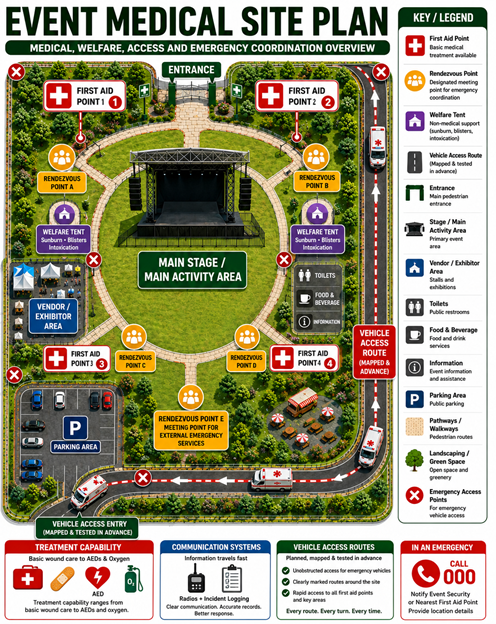
Make sure your plan clearly defines:
- First aid points – number, location, and clear signage
- Treatment capability – from basic wound care to defibrillators (AEDs) and oxygen
- Welfare tents – for non-medical needs like sunburn, blisters, or intoxication
- Vehicle access routes – mapped and tested in advance
- Rendezvous points – a clear meeting point for external emergency services
- Communication systems – radios and incident logging so information travels fast
Together, these elements form the physical backbone of your medical plan. Without them, even a well-staffed team can struggle to respond quickly.
Step 4: build your escalation and emergency response plan
Even the best-staffed festival will face incidents beyond first-aid-tent capability. Because of this, your medical plan needs a clear escalation process.
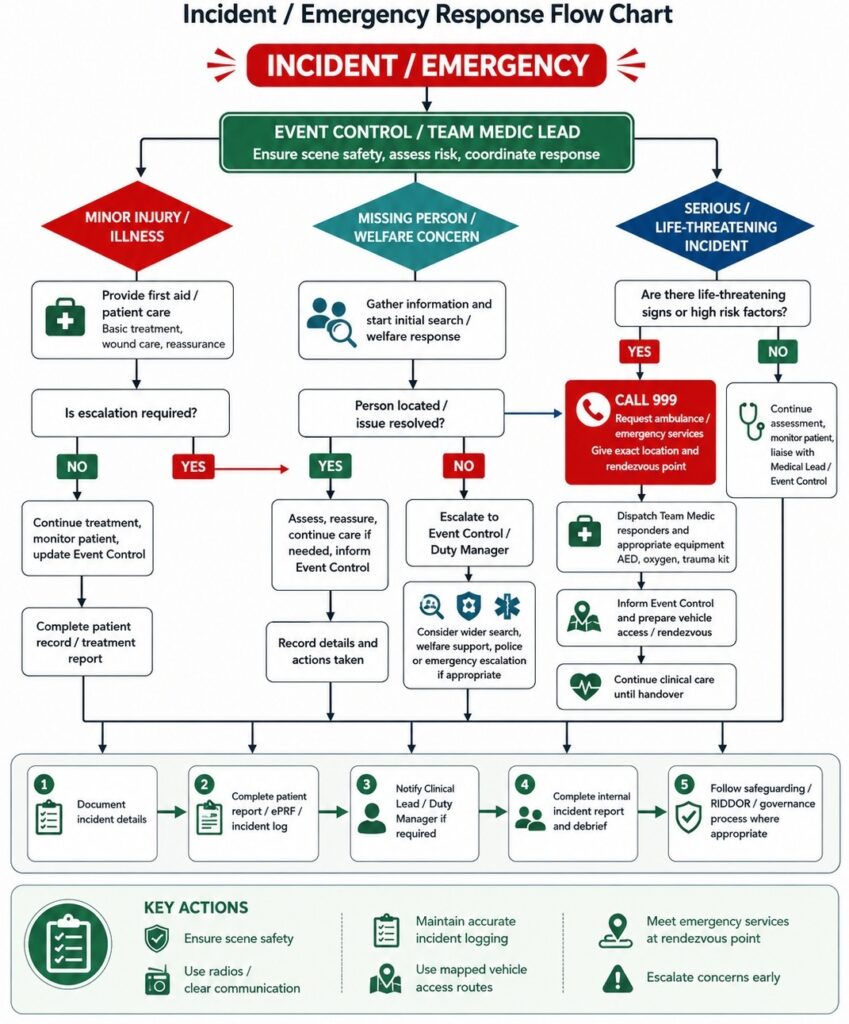
Your plan should define:
- What counts as a minor, moderate, or major incident
- Who has authority to call an ambulance or declare a major incident
- How information reaches event control and, if needed, outside emergency services
- A pre-agreed liaison point with the local ambulance trust
- A casualty clearing and evacuation plan for larger events
Anyone can draft an escalation flowchart. The real value comes from having run that process live, under pressure, and refined it based on what actually happens on-site.
Step 5: document, communicate, and rehearse the plan
A medical plan that sits in a folder isn’t a medical plan. It’s paperwork.
Before your event, take these steps:
- Share the plan with security, stewarding, and local emergency services
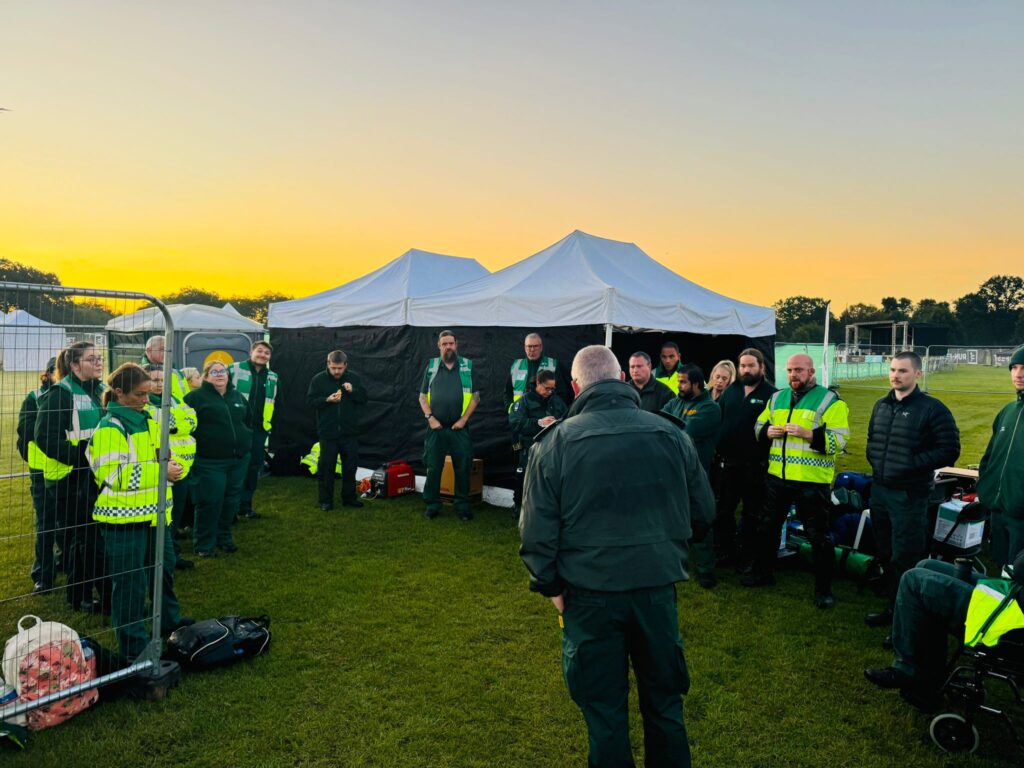
- Brief your medical team on-site, not just by email beforehand
- Walk the site together so the team knows every first aid point and access route
- Test your communication channels in advance
- Agree a debrief process so lessons feed into your next event
Common mistakes to avoid
Across the events we support, a few issues come up again and again:
- Underestimating heat and hydration risk, even at UK summer events
- Assuming security staff can double as medical responders
- Missing a clear vehicle access plan for ambulances
- Treating the medical plan as paperwork rather than a working tool
- Leaving medical planning until weeks before the event
Avoiding these mistakes early makes the rest of your planning far easier.
Final thoughts on building your event medical plan
A strong event medical plan blends risk assessment, the right staffing levels, solid infrastructure, a clear escalation pathway, and a well-briefed team. It isn’t just about compliance. It’s about making sure your event responds quickly and calmly if something goes wrong.
This is the exact process we follow at Team Medic for every event we support, whether it’s a small community fun run or a major multi-day festival.
FREQUENTLY ASKED QUESTIONS
An event medical plan is a documented, structured strategy covering risk assessment, staffing levels, equipment, communication, and escalation procedures for medical incidents at an event. It’s more than booking first aid cover – it’s the formal framework licensing authorities expect to see as part of your event safety documentation.
In most areas, licensing authorities expect a formal medical plan, often referencing frameworks such as the Purple Guide, before granting an event licence. Without one, your licence application can be delayed or refused, regardless of how experienced your organising team is.
Medical staffing levels depend on your event’s specific risk assessment, not a fixed ratio. Key factors include estimated attendance, peak crowd density, event type, alcohol and substance use, and whether the event needs Basic Life Support (BLS) cover or Advanced Life Support (ALS) with paramedics on-site. Any provider quoting a flat staffing number without assessing your event first is guessing.
A first aid point provides clinical treatment, from basic wound care through to defibrillators and oxygen, while a welfare tent handles non-medical needs such as sunburn, blisters, or intoxication. A strong event medical plan clearly separates the two, so clinical resources aren’t diverted to non-clinical issues.
An effective escalation plan defines what counts as a minor, moderate, or major incident, who has the authority to call an ambulance or declare a major incident, how information reaches event control and outside emergency services, and a pre-agreed liaison point with the local ambulance trust. For larger events, it should also include a casualty clearing and evacuation plan.
Medical planning should begin well before the weeks leading up to an event, ideally alongside your initial licensing and risk assessment work. Leaving it until shortly before the event is one of the most common – and avoidable – mistakes organisers make, since staffing, infrastructure, and escalation planning all depend on an early risk assessment.
No. Security and stewarding staff should not be relied on as medical responders. Assuming they can double up in this role is a common and risky mistake; medical cover should be provided by trained first aiders, paramedics, or clinical leads matched to the event’s actual risk level.
Team Medic builds and delivers event medical plans for festivals, sporting events, and outdoor gatherings of every size, from risk assessment through to on-site staffing and escalation planning. Contact Team Medic to discuss medical cover for your next event.